
Editor’s Note: This artist profile is part of a statewide series highlighting Tennessee artists participating in Ars Gloria, a visual arts initiative presented by the Tennessee Press Association and the Tennessee Art League. Follow Ars Gloria on Facebook and Instagram for additional artist features, competition news, and updates throughout the year.
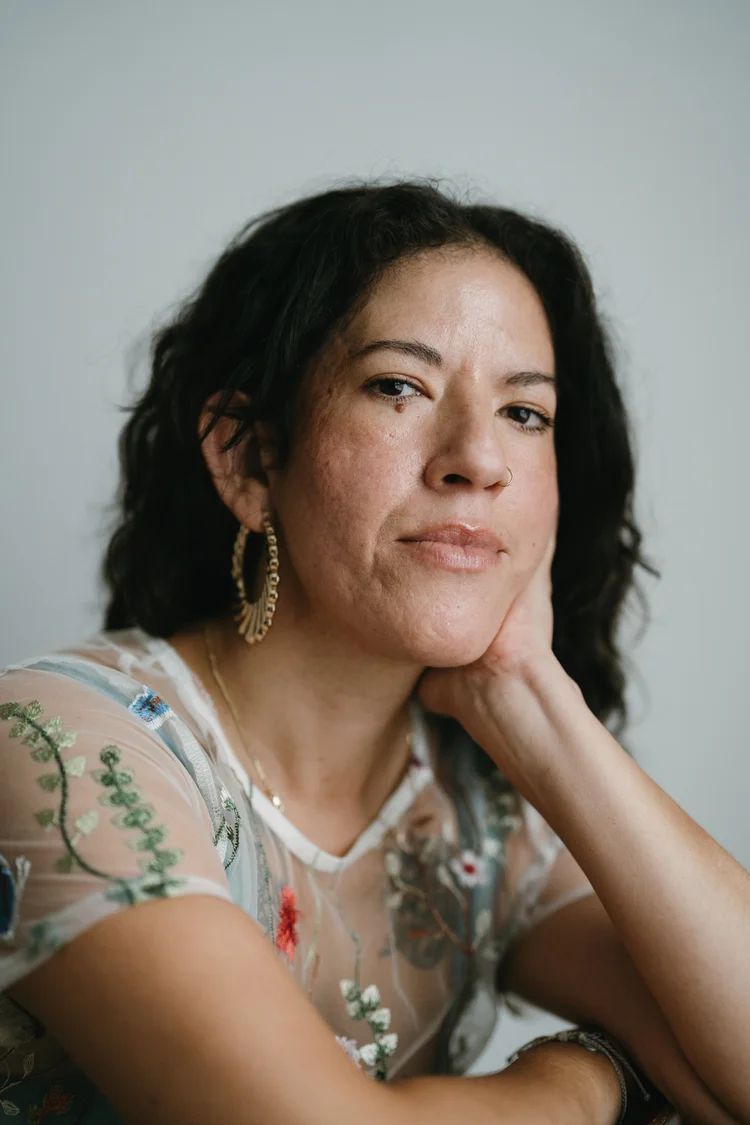
What gets preserved when someone takes a photograph? Is it merely the people, places, and things within the frame? Or are the connections between those subjects—including the context that binds them and the dynamics at play—also part of the composition?
For Memphis photographer Andrea Morales, a picture holds more than what appears within the frame. It is a record of the relationships between everything in focus. And tied to those relationships are important questions: Who agreed to be seen? Who was allowed access to the subjects? What power passed between them? And which responsibilities remain after the image is taken?
According to Andrea, these questions are part of the “inherently extractive” process of taking a picture. A camera takes something from a moment and carries it to an audience that may never encounter the people depicted in person.
Thinking about what photographers take from moments in time, Andrea was left with a pressing question: What should I give back?
She found part of the answer while considering the work of Brazilian photographer Sebastião Salgado. Known for sweeping documentary projects chronicling workers, migration, and some of the world’s harshest realities, Salgado prompted Andrea to describe an approach to photography with a word she had not previously considered in that context: mercy.
“It felt right,” Andrea says.
To Andrea, mercy begins with using her camera to illuminate inequity while preserving a subject’s humanity. She draws inspiration from photographers who meet people as equals, rather than treating them as subjects required to perform their suffering for an audience.
Andrea brings that same ethic to her role as creative director at the nonprofit newsroom MLK50: Justice Through Journalism, which reports at the intersection of power, poverty, and public policy.
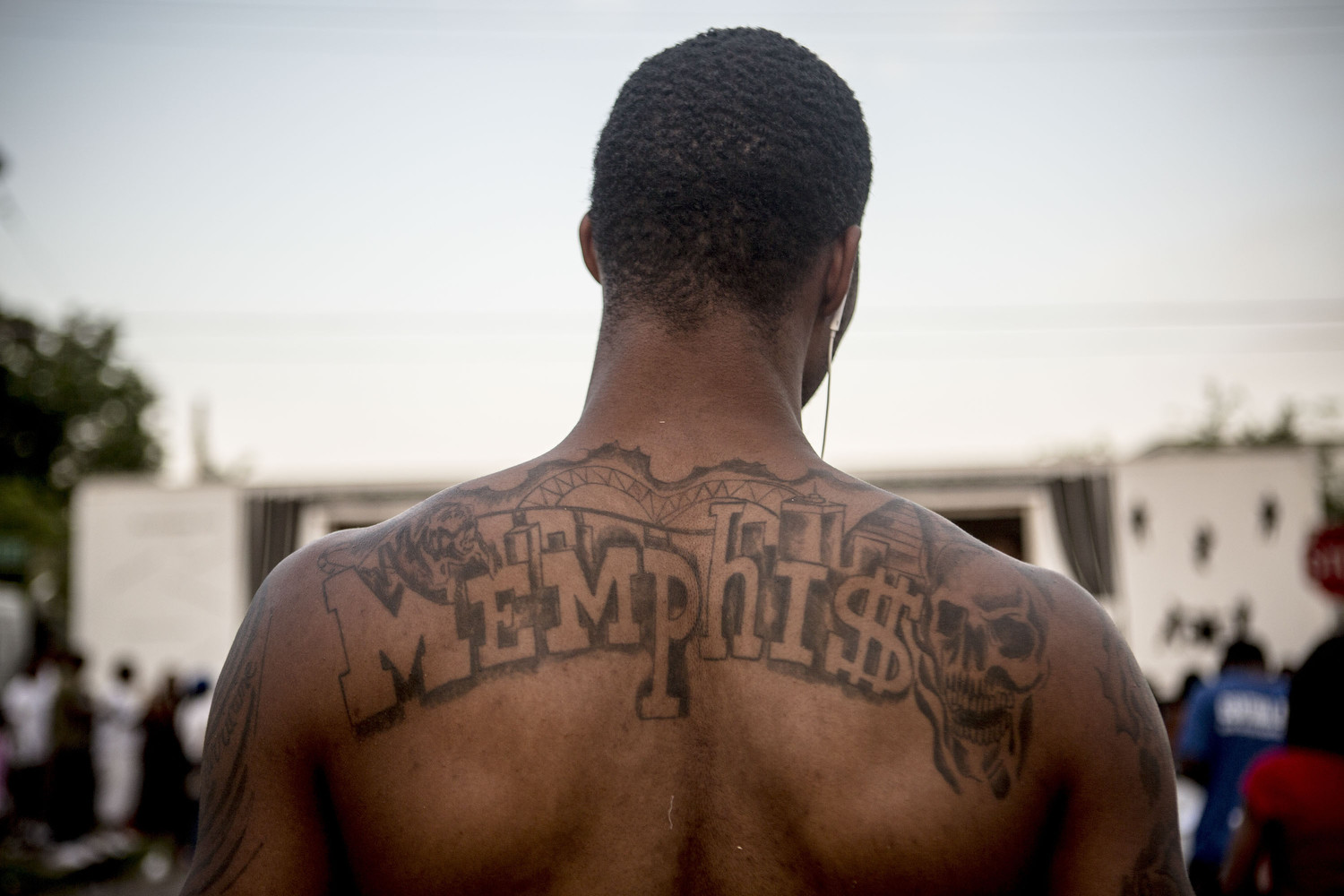
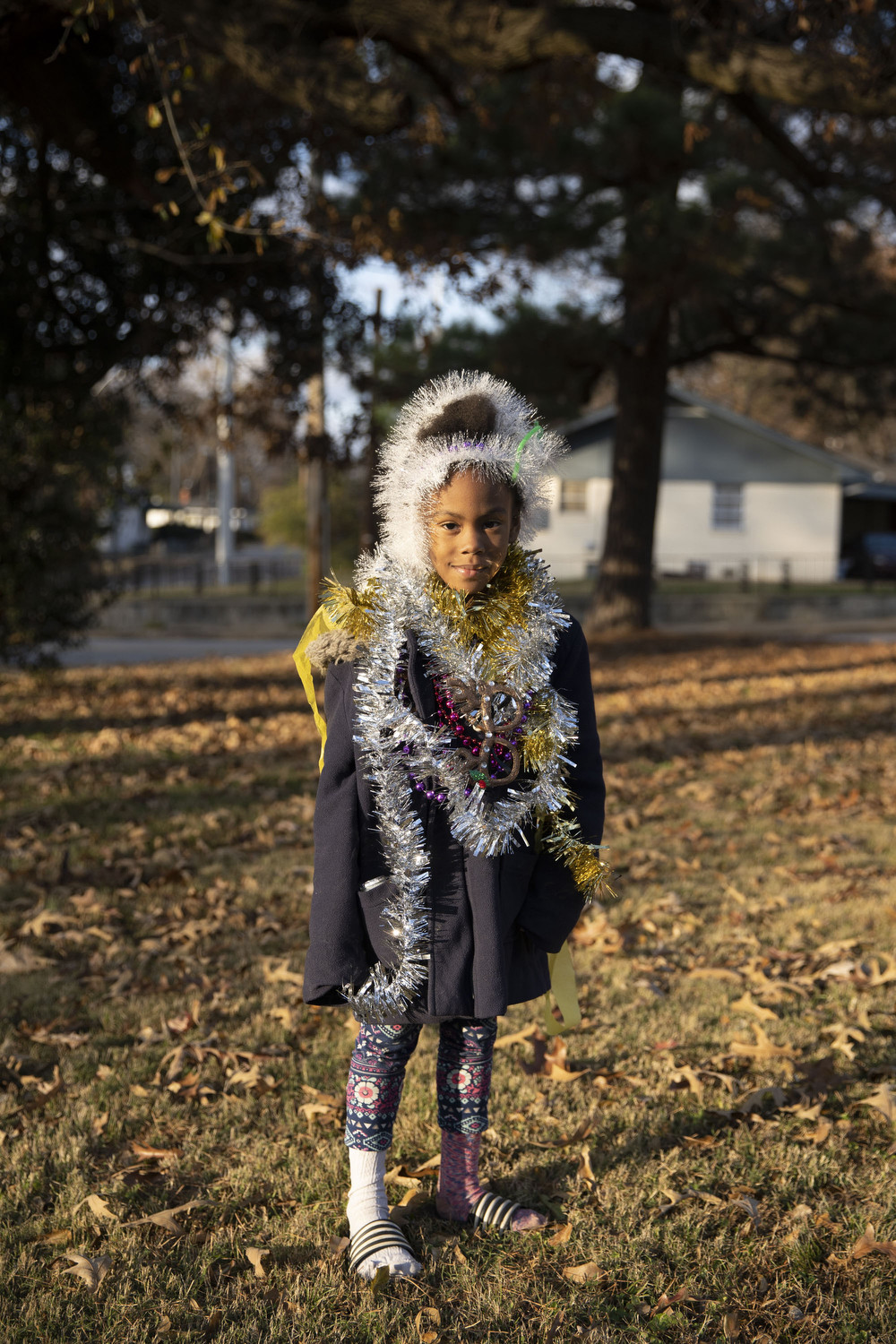
That principle also shaped “Roll Down Like Water,” a decade-spanning body of work exhibited at the Brooks Museum of Art in 2024. In the project, Andrea carried many of the same questions she asks in journalism into a museum setting: how people are represented, what context is preserved, and what obligations must be fulfilled after an image is made.
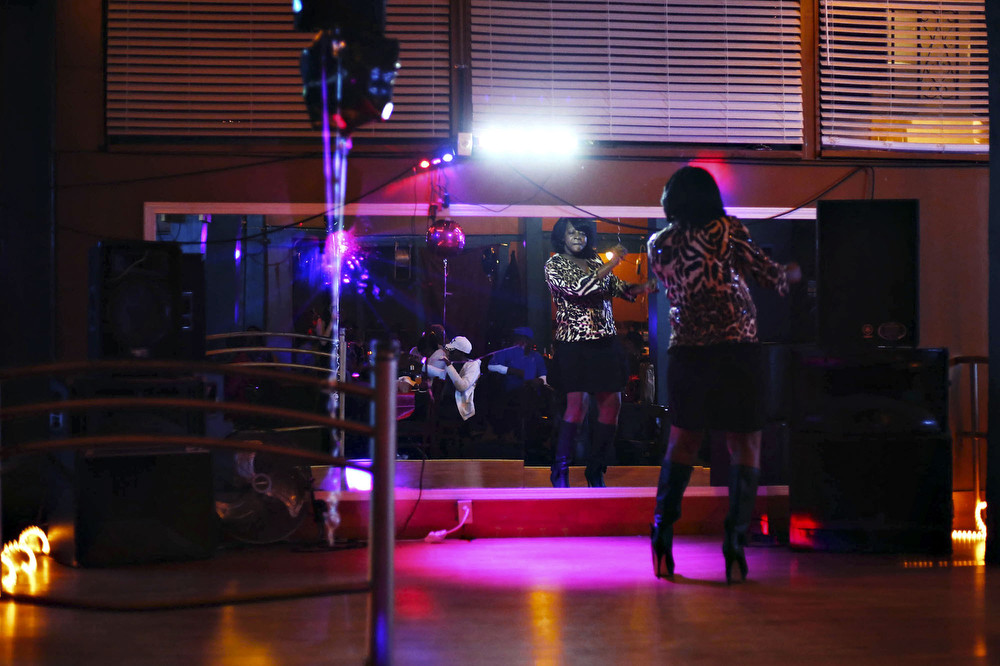
The work moves between journalism and art, but Andrea is less interested in defending the boundary between those categories than in questioning what each one permits. Her photographs bear witness to public struggle, but they also refuse to treat struggle as the only truth worth recording.
“The photograph isn’t trying to traffic in suffering and pain as much as it is the number of other things—the number of other multitudes,” she says.
Finding Her Focal Point
Born in Lima, Peru, Andrea moved with her family to Miami in 1989 when she was four years old. She recalls Peru in the ’80s as a difficult place to live, marked by political turmoil, American intervention, and failures across the ideological spectrum.
Her parents joined friends in Miami and pursued what she calls “the American dream, kind of.”
Andrea was young enough to adapt quickly, but the experience of migration never fully disappeared. “The things that are confusing as a kid, I feel, are still confusing as an adult,” Andrea says, especially the sensation of feeling other—or “moving like an other sometimes.”
Miami gave her memories she still loves. She remembers Florida’s beauty and the energy of growing up there in the late 1980s and 1990s. Yet the city seemed to organize itself around appearance and wealth, which she found frustrating.
When college offered an exit, Andrea was ready to leave. She attended the University of Florida, where she initially imagined studying some form of writing or storytelling. But even as an avid reader in childhood, her bilingual education had left her uncertain about her command of written English.
Andrea considered sociology and archaeology before attending an orientation for the journalism program and learning about photojournalism. There, she discovered a medium that gathered her scattered interests into one practice: storytelling, observation, and what she calls “this way of making meaning out of moments, so that we are on a constant journey of learning, retelling, and remembering.”
Photography also gave her a creative language that felt more accessible at the time than writing. But she would have to work against a program culture that was male-dominated and leaned heavily toward sports. While many of the young men around her wanted to create monumental sports images, Andrea wanted to use photography more expansively—to connect with people, ideas, and cultures.
Andrea earned her journalism degree in 2006. Afterward, she interned at small daily newspapers and spent two years at The Lima News in northwest Ohio.
Small-town life was unfamiliar, and learning its rhythms appealed to her. So did the work emerging from Ohio University’s renowned photojournalism program in Athens. She followed its graduates online, studied their approaches, and eventually decided to enroll.
At Ohio University, Andrea found the time and community to develop long photographic essays. Rather than chasing only the decisive image, she stayed with ordinary people over extended periods, using individual lives to reflect larger shared realities instead of documenting isolated moments.
Through this photographic essay work, she learned what kind of power the camera really possessed—and what kind of person she wanted to be while holding that power.
There, she also found a stronger connection to fellow photographers. The relationships formed there would help sustain her through a profession increasingly defined by low pay, shrinking newsrooms, and unstable employment.
After working at a family-owned newspaper in Concord, New Hampshire, Andrea moved to Memphis in 2014 and began freelancing full time.
M-Town and the Work of Staying
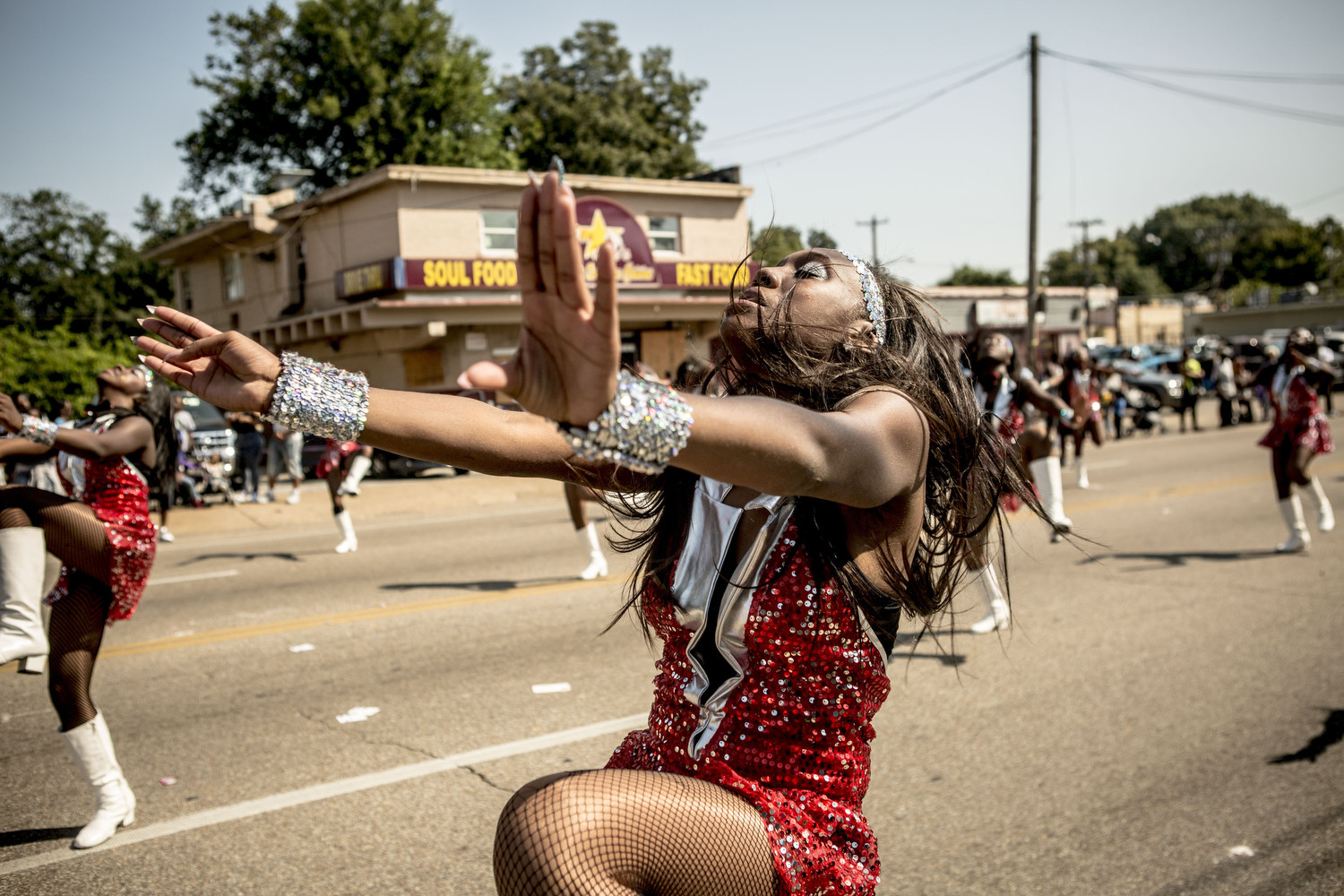
In Memphis, Andrea was struck by the “aggressively charming” nature of the city.
At first, she accepted nearly any assignment that required a photographer. But gradually, she built an editorial practice that included work for national publications such as The New York Times and The Wall Street Journal, along with community projects closer to home.
An artist residency at Crosstown Concourse gave her studio space and an opportunity to photograph the neighborhood where she lived—and still lives.
By 2018, the freedom of freelancing had become inseparable from its instability. Slow months were “crazy-making,” and Andrea wanted more from her work.
She joined the Southern Documentary Project at the University of Mississippi’s Center for the Study of Southern Culture, producing documentary work while pursuing an MFA in documentary expression.
The degree widened the frame again. Documentary expression drew from sociology, musicology, history, food studies, oral history, folklore, film, audio, and still photography. Its purpose was not to lock documentary into a definition, Andrea says, but to preserve space for the many ways people keep records of what was. That interdisciplinary approach changed not only how she understood documentary practice but also how she understood the ways people teach and learn.
During the MFA program, Andrea began assembling “Roll Down Like Water” as a photographic meditation on Memphis and its place in the struggle for collective liberation. She continued the project through the pandemic with guidance from thesis adviser Ralph Eubanks.
After Andrea returned to Memphis in 2021, curator Rosamund Garrett championed the work within the Brooks Museum. It ultimately became a solo exhibition accompanied by a catalog and community programming.
When Documentary Becomes Art
Seeing the photographs inside the museum unsettled some of Andrea’s assumptions about her own work. The images had been made within journalism and community, where the feedback loop is tight and people can hold a photographer accountable.
At the Brooks Museum, some were printed at 50 by 60 inches and set in gilded frames. Printers, framers, curators, and gallery staff gave them the formal treatment of what Andrea calls “big-A Art”—special, rare, and often commodified.
That treatment seemed, at first, to conflict with the accessibility she valued. Photography had given Andrea freedom when the medium became accessible to her. She did not want her own work to reproduce the exclusion or misrepresentation she resisted.
Yet the exhibition revealed another possibility: care itself could be celebrated.
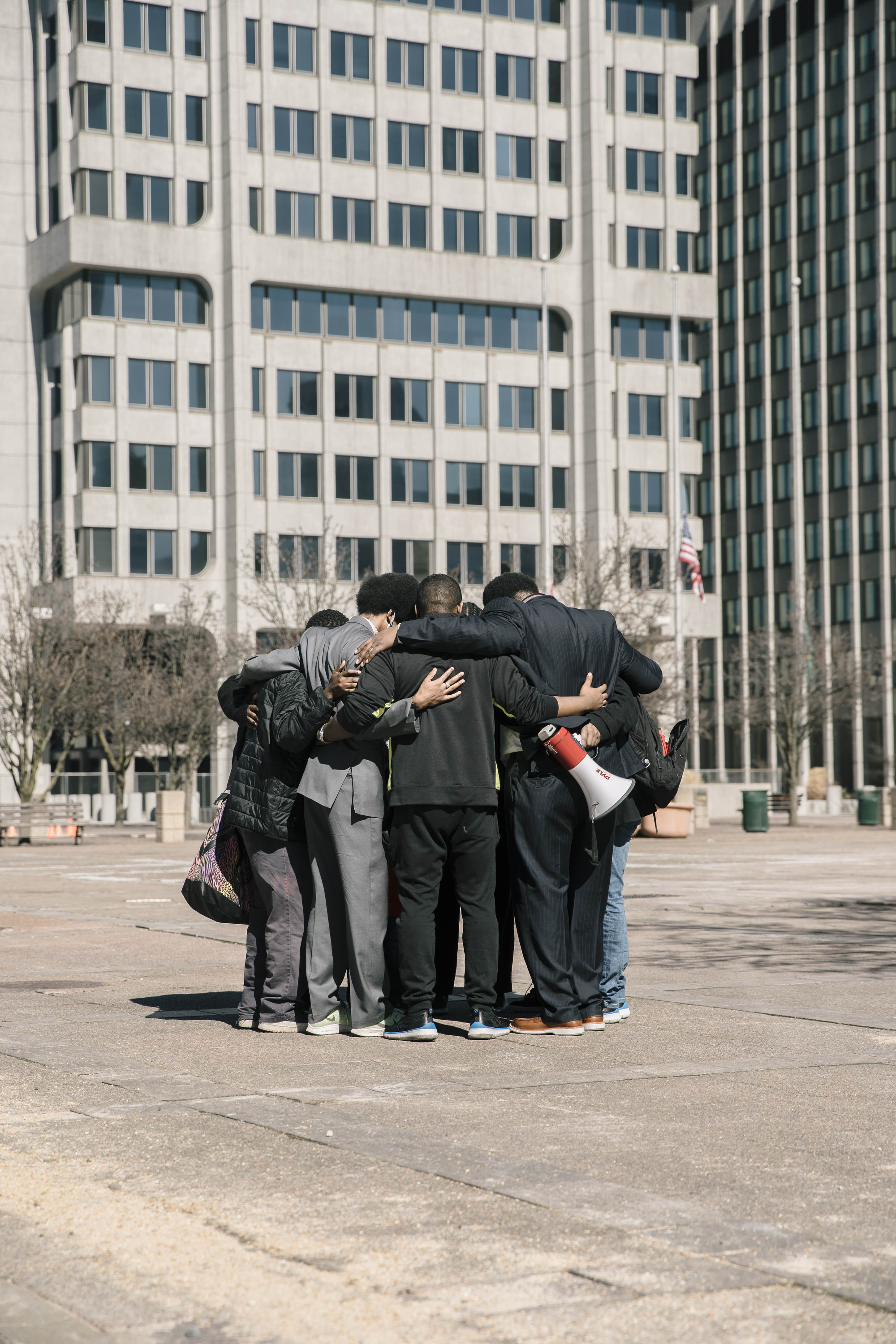
People in Memphis told her they were pleased to see their community presented with such attention. Andrea is careful about the distinction. Marginalized people in Memphis have been photographed many times; the problem, she says, is that those images can flatten the complexities and histories needed to understand them. “Roll Down Like Water” attempts to make space for lives that contain pain without being defined by it.
The exhibition included 60+ photographs, three essays, workshops, community resources, and programming that extended the work beyond the gallery walls.
Even now, Andrea is processing what it meant. The project had occupied roughly a decade of her life, and she has no desire to invent a next grand exhibition simply because the last one succeeded.
A photograph installed at Memphis International Airport creates a smaller version of the same tension. Selected through a public-art initiative coordinated by the UrbanArt Commission, the image shows people in line at the National Civil Rights Museum as they pass the room where Dr. Martin Luther King Jr. was staying when he was killed. Windows and mirrors layer the scene with reflections, multiplied again by the airport’s difficult lighting, which Andrea jokes “is not cute.”
Still, she values being part of a collection of local art that introduces travelers to Memphis through the work of people who live there.
What the Photographer Gives Back
At MLK50, her attention has expanded from making photographs to shaping a broader visual and editorial culture. Andrea writes, supports reporters, does some of her own reporting, and thinks about how people can enter a shared storytelling process. She rejects the idea that writers and photographers operate in separate worlds. Both observe the same material realities; their outputs simply look and feel different.
“My writing is visually driven,” she says. “I compose on the page much as I compose within a frame.”
She is photographing less now, but differently. The change does not signal a retreat from image-making so much as a wider understanding of what the work can contain. A photograph may be an object, a document, a news image, a piece of public memory, or an invitation into a community conversation. It may enter a newspaper, a museum, an airport, or a book. Wherever it lands, Andrea remains interested in what happens around it—and in who is allowed to answer back.
Her approach begins by refusing an old journalistic cliché: that a photographer or reporter “gives voice to the voiceless.” Andrea once understood the expression’s appeal. Now, movement journalism and her own practice begin with the power people already possess.
“No one should have to prove themselves in front of a camera for some future audience,” she says. “I try to meet people where they are because that connection comes through in the photograph.”
Mercy, in that sense, is not softness or distance from hard realities. It is a discipline of looking without flattening—a decision to witness inequity while leaving the people inside the frame fully human.
For further information about the work of Andrea Morales, visit her website and social media.