
Editor’s Note: This artist profile is part of a statewide series highlighting Tennessee artists participating in Ars Gloria, a visual arts initiative presented by the Tennessee Press Association and the Tennessee Art League. Follow Ars Gloria on Facebook and Instagram for additional artist features, competition news, and updates throughout the year.
The narratives held within Tennessee’s history are richly layered. Chock-full of depth and emotion, they remain embedded across the state’s landscape. From the rural communities that once measured life by the seasons to metropolitan areas continually remaking themselves, each locale in the Volunteer State behaves much like a living character acting out a much larger drama.
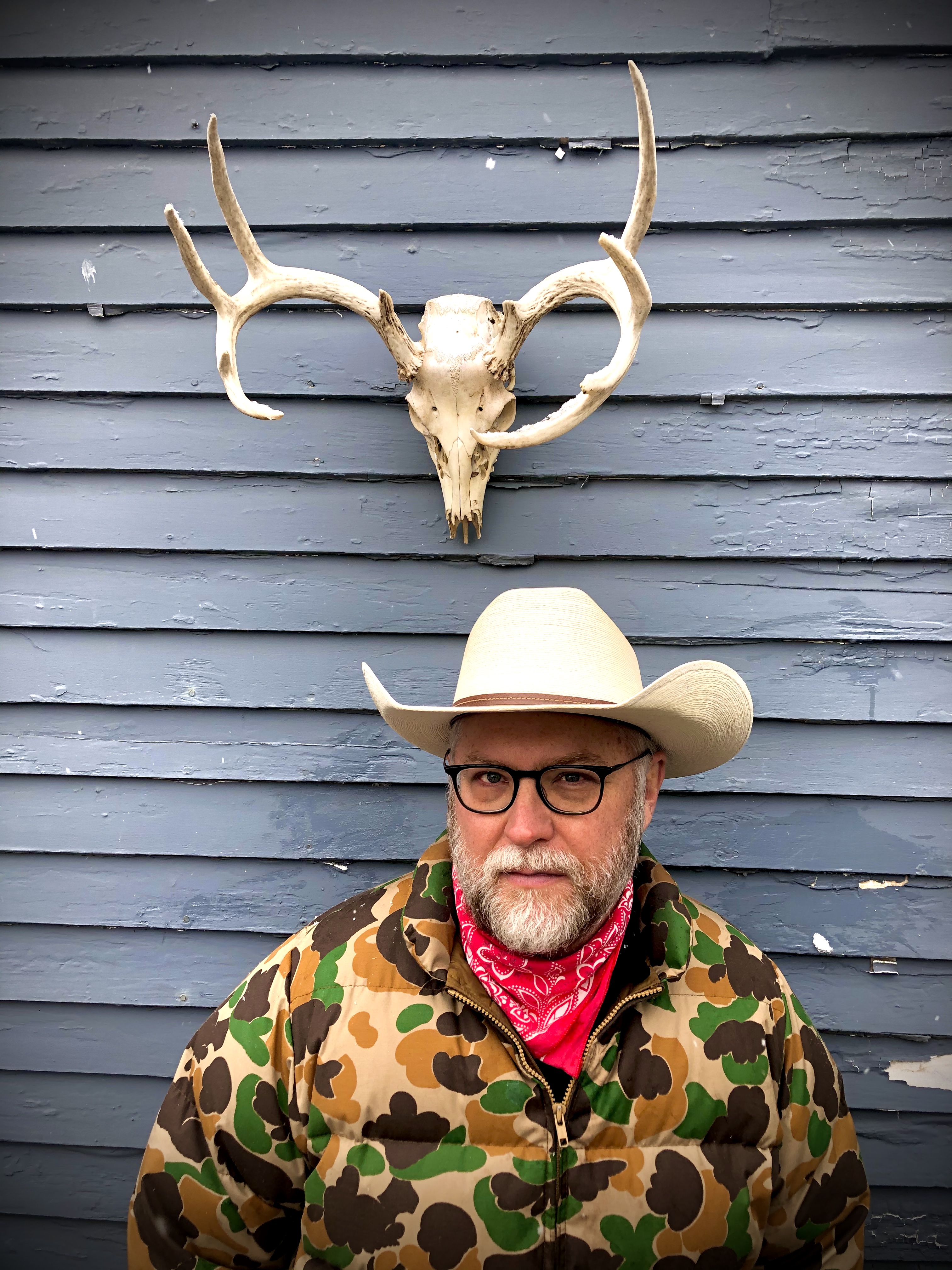
Nashville visual artist Brady Haston has spent much of his career exploring that drama. Moving freely through the annals of Tennessee, Brady works to capture the memory of a landscape. This might involve studying the details of nineteenth-century imagery one moment and comparing them with the appearance of a modern-day downtown street the next.
“When people see my work, they can find that there’s a local narrative going on,” Brady says. “I feel really comfortable jumping in and out of time. It all comes from this idea of relating to the area you’re in at the time you’re in.”
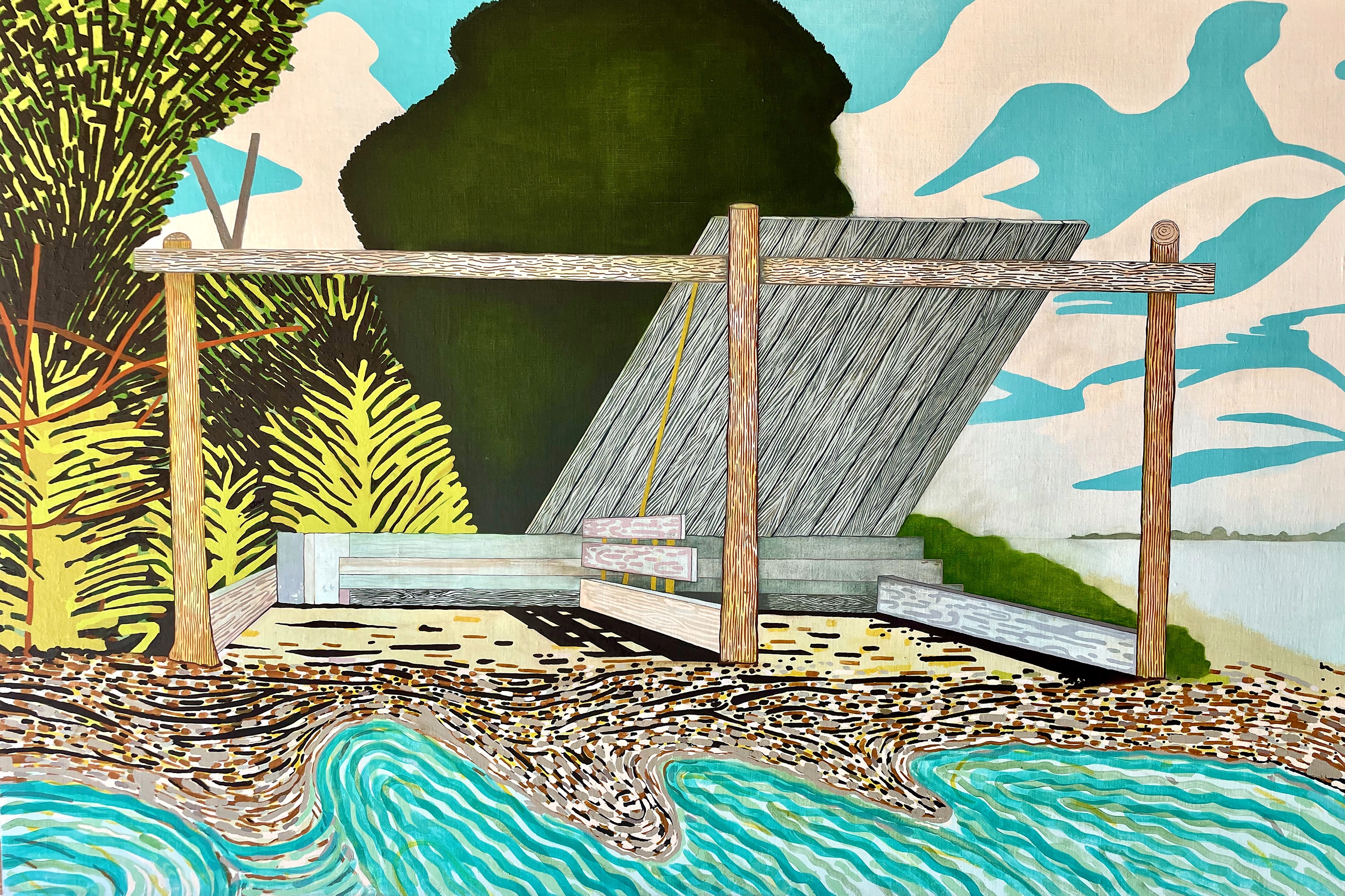
Pivoting between chronologies in his paintings and drawings, Brady’s art has grown more representational in recent years. But this kind of representation is more focused on the spirit of the thing than its literal depiction. “It’s the idea of a landscape more than the actual look of a landscape.”
The approach reflects an artist interested not just in what Tennessee looks like, but in how a place accumulates its stories.
Drawing From History
But where did this interest in the ties binding one generation of Tennesseans to the next—and each generation to the land—even begin for Brady?
The answer? Right at home.
Hailing from Spencer, Tennessee, Brady proudly shares that he comes from a line of Tennesseans who’ve called that area home for generations.
He recalls that when he was young, his father was deeply interested in the state’s history. Copies of historical books were always lying around the house, acting as gentle reminders of the past’s importance.
Brady also absorbed this knowledge, stealing moments with the books in his own downtime. Through them, he learned to appreciate these histories. “Years later, I went to the Tennessee State Library and Archives (TSLA) and searched its materials for Van Buren County. I found all these books I had grown up with, so I didn’t really learn anything new there. I thought that was interesting.”
Brady’s interest in the state’s history stays with him today. He says that one particularly influential book he read was “Chronicles of the Cumberland Settlements” by Paul Clements. A collection of letters and firsthand accounts from the 1780s and the period preceding Tennessee statehood, the book gave Brady a detailed window into the people and events that shaped the Cumberland settlements.
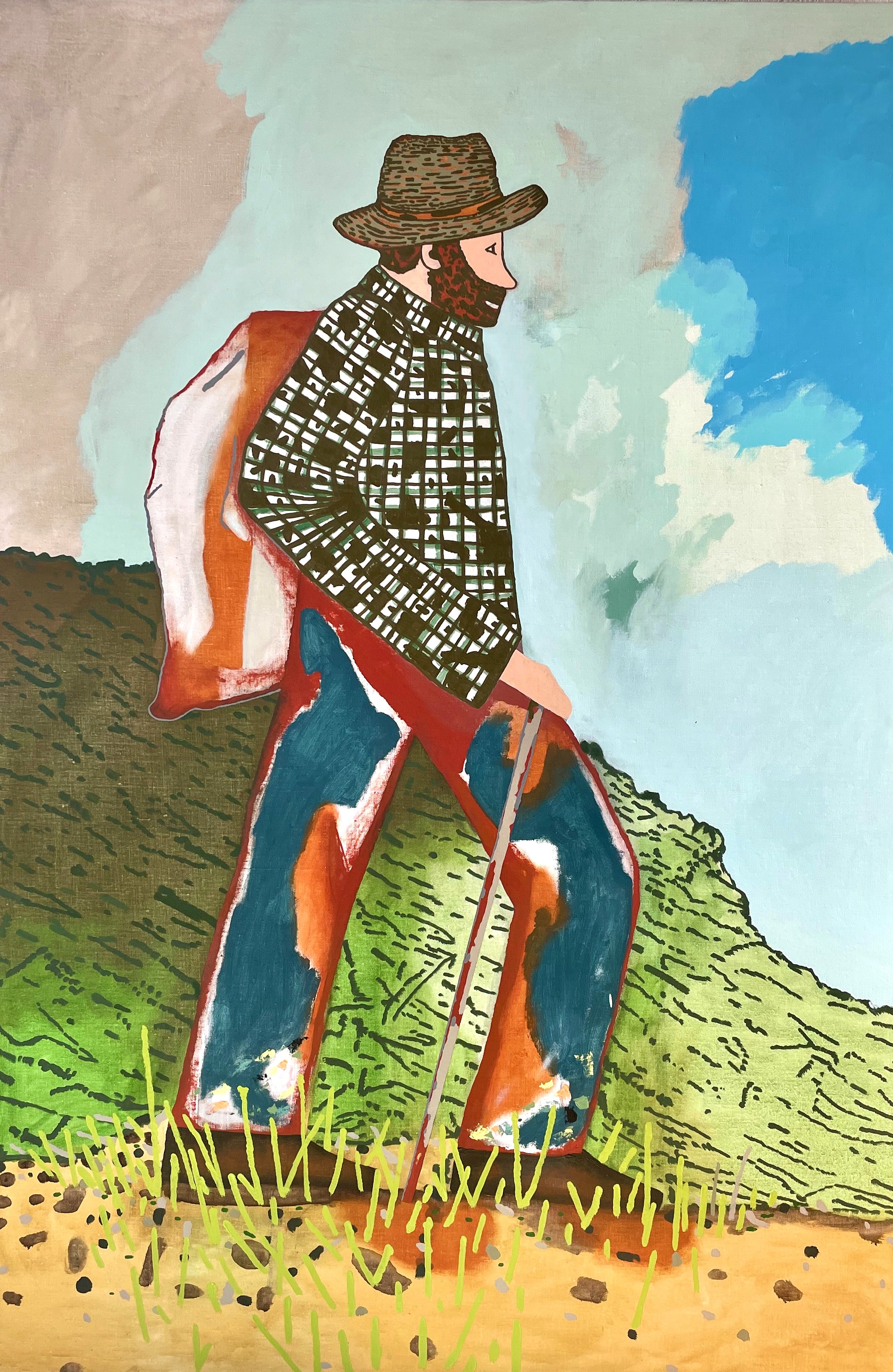
Those accounts directly influenced Brady’s “Fragmentary Survey,” which includes paintings inspired by early settler Thomas “Big Foot” Spencer and Tennessee’s first surveyors.
Reading about historical figures who had become obscure helped Brady see where local experience entered a national narrative. “I try to capture where Tennessee becomes part of the American story rather than focusing only on the regional.”
He regards the past as an unusually rich resource, taking a cue from contemporary artist Kara Walker. Walker’s work showed Brady how nineteenth-century iconography could challenge perceptions of the American South’s history.
By bringing his own historical inquiries to paper and canvas, Brady aims to enrich a viewer’s experience of living in a particular place. “Everybody is so concerned with the day-to-day that they forget about the past,” he says. “In some ways, history may feel trivial. But it’s also interesting to slow down and investigate it. You have a richer experience with your city—and maybe even with the people surrounding you—if you know more about its historical context.”
Finding Art and Community
Although Brady had always drawn, he initially entered college as a pre-med student. That path quickly lost its hold after he enrolled in an art class and found himself absorbed by it.
Another revelation occurred in the library at Tennessee Tech University, where Brady encountered the intricate engravings of German Renaissance artist Albrecht Dürer. Their remarkable detail made him want to understand how such images were created.
Following that interest led Brady to Middle Tennessee State University, where he earned his Bachelor of Fine Arts degree in 1992. More than an education, MTSU gave him a lasting community.
“A lot of artists in Nashville went to MTSU, including a lot of my good friends,” he says.
Brady later attended Montana State University, completing his Master of Fine Arts degree in 1997. Drawn west by a curiosity he could not fully explain, he encountered a landscape dramatically different from the one he had known in Tennessee.
Montana also introduced him to the nineteenth-century watercolors of Karl Bodmer. Along with Winslow Homer, Bodmer influenced Brady’s use of landscape and color.
The distance from home ultimately sharpened Brady’s understanding of it.
“It helped me understand Tennessee even better because it’s such a different place and a different type of landscape,” he says.
After returning to rural Tennessee and working in construction, Brady followed friends to Chicago. There, he found a studio, exhibited, and taught at Columbia College Chicago. The city’s competitive art world pushed him toward a more serious understanding of his practice.
“If you’re serious about being an artist, the only thing you can do is make work and see what happens,” Brady says. “You can’t sit around and complain. You just have to work.”
Returning to Nashville
Even while living in Chicago, Brady continued developing relationships in Nashville. He began showing with Zeitgeist Gallery in 1998 after introducing his artwork to gallery founder Janice Zeitlin.
A teaching opportunity at Watkins College of Art and Design eventually offered him a path home. Brady joined the Watkins faculty in 2006, teaching drawing, printmaking, foundations, and independent study.
“Watkins at the time was a wonderful place,” he says. “There were really high-quality art students and faculty, and we had good synergy going on.”
The position also brought greater stability. In 2008, Brady purchased a house in East Nashville with space for a studio. A Pollock-Krasner Foundation grant in 2016 helped him finish the workspace, while a Tennessee Arts Commission grant that same year provided further support.
“Owning the place has helped me focus on building art over time in a way I had never been able to do,” he says.
His Dickerson Pike-inspired painting “Streetwalker” also entered the Music City Center’s permanent collection.
Brady remained with Zeitgeist through three locations and nearly 27 years of Nashville’s transformation. The gallery was still operating when his interview was initially conducted in 2025, but closed at the end of that year.
“Zeitgeist has been responsible for my career in many ways, and I’m incredibly grateful,” he says. “Their support has been amazing, not just for me, but for Nashville’s entire art community.”
Brady now tries to extend that support to younger artists. He and his wife, fiber artist Jennifer Haston, also purchase artwork when they can. His East Nashville studio hosted the release of David Piñeros’ book “62,” an event later named the Nashville Scene’s 2025 Best Photography Event.
Watkins’ closure, Nashville’s March 2020 tornado, and the COVID-19 pandemic arrived in close succession. Although the loss of Watkins saddened him, the end of the school unexpectedly gave Brady more time in the studio. He subsequently joined Austin Peay State University as an adjunct professor.
A Monument of Time Spent
Additional studio time did not make Brady a fast painter. One painting may require more than two years to complete as he enters the work, loses his sense of its direction, steps away, and later finds his way back inside it.
“The element of time has been really important for me,” he says.
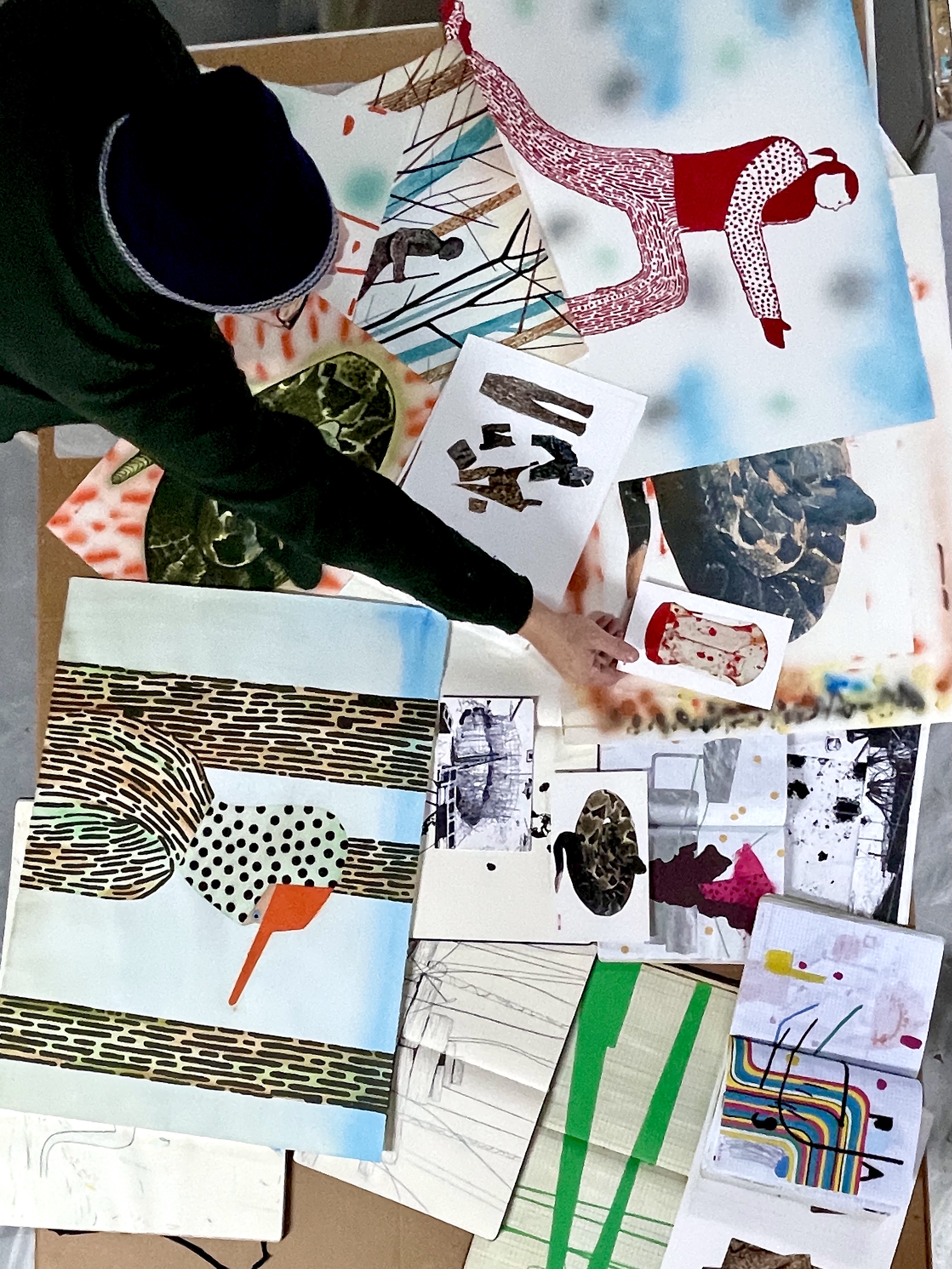
One sketchbook took 14 years to complete and grew to between 500 and 600 pages. Brady calls it “a monument of time spent.” Its pages preserve discipline, uncertainty, changing ideas, and the gradual development of an artist’s hand.
“It shows the growth and the ebb and flow of ideas,” he says. “Some pages look terrible, and others are really nice. That reflects my psyche, but it also shows growth and decay in ideas, images, and skill.”
In 2021, Brady presented six paintings, five drawings, and eight sketchbooks arranged chronologically in a Zeitgeist exhibition. Years of private accumulation became a visible record of time passing.
His 2024 exhibition, “Optimist’s Journey,” expanded that exploration. The work drew from Pieter Bruegel’s sixteenth-century “Large Landscapes” prints, nineteenth-century illustrations from Harper’s New Monthly Magazine, and contemporary accounts of ʻOumuamua, the interstellar object observed passing through our solar system.
Though separated by centuries, these sources converged around travel and transience.
“We are all passing through this place and time,” Brady wrote in his artist statement for the exhibition.
Between Series
When Brady spoke with Ars Gloria in 2025, he described himself as being between bodies of work. Reading had generated ideas in the past, as had unexpected encounters with graffiti, painted-over marks, torn paper, unfamiliar colors, and unusual shapes.
“I think artists have a strong affinity for their unconscious or subconscious,” he says. “There’s always something unexpected that can happen.”
Rather than pursuing monumental projects, Brady continues painting and drawing while waiting for the next idea to reveal itself.
“Some years are better than others in terms of productivity, but I keep hammering on,” he says. “One of my friends said I make art like I’m plowing a field.”
Since that interview, Brady has begun working with Nashville’s Red Arrow Gallery. His paintings “Hydra” and “Lake Camp” appeared in the gallery’s 2026 group exhibition, “Nashville Hot Summer: Edition 4.”
An Artist-Poet’s Document
Despite years spent in Montana, Chicago, and Nashville, Brady remains tied to rural Tennessee. He values its landscapes, seasons, people, and subtle sense of humor while recognizing the tensions created by the state’s rural-urban divide.
His mother grew up without electricity, while older relatives in Spencer organized their lives according to the seasons.
“Time for rural people is different,” Brady says. “I think that’s one reason I don’t get so caught up in time in my work. Everything is steady.”
That steadiness exists alongside the ebb and flow of history. Brady hopes his artwork will preserve something recognizable about Nashville and Tennessee for viewers encountering it long after the present has become the past.
“I would like people to look at my work a hundred years from now and say, ‘This is what an artist-poet would have been looking at in Nashville. This is what the city looked like. These are some of the things people were thinking about,’” he says. “I want it to be a document for the future. I want it to be relevant to the culture.”
For further information about Brady Haston and his work, visit his website and social media.