Editor’s Note: This artist profile is part of a statewide series highlighting Tennessee artists participating in Ars Gloria, a visual arts initiative presented by the Tennessee Press Association and the Tennessee Art League. Follow Ars Gloria on Facebook and Instagram for additional artist features, competition news and updates throughout the year.
For as long as he can remember, Tennessee artist Jairo Prado has been making something from almost nothing.
As a child growing up in Colombia, he fashioned toys from old car parts behind his father’s mechanic shop. He painted discarded bottle caps and sold them to classmates during recess. He rescued worn leather shoes from the trash, carefully disassembled them and transformed the material into jewelry and wearable art.
Limited resources did not discourage him. Instead, they became an education in creativity.
“I learned to be resourceful with what was available,” Prado says. “Ingenuity helps creativity. Anything can be transformed into art if you have the vision for it.”
That lesson would follow him across continents and through a career spanning decades.
Today, Prado is widely recognized as one of Tennessee’s leading visual artists, working across painting, sculpture, mosaics, mixed media and public art. During more than 40 years in Tennessee, he estimates he has received roughly 60 awards and more than 80 throughout his lifetime.
Among the milestones he considers most meaningful are the Best of Show Purchase Award at the 34th Tennessee All-State Exhibition in 1995; inclusion in the Tennessee State Museum’s Millennium Collection in 2001; a National Endowment for the Arts creation grant supporting his large-scale mosaic mural “Migration” in 2011; and the Tennessee Arts Commission’s Individual Artist Fellowship for Craft in 2022.
Each recognition, he says, affirmed years of persistence and exploration. Yet even after decades of acclaim, Prado hesitates to speak as though he has arrived.
“I’m still learning,” he says. “I don’t think I will ever stop learning and looking for solutions to create ideas.”
Learning Through Exploration
Born in 1947 in Cali, Colombia, Prado spent most of his childhood in Bogotá, where the city’s museums, churches, architecture and surrounding landscapes made an early impression.
His desire to experience art was so strong that he sometimes skipped school — in the name of another kind of education.
“I would go downtown to hang out with the saints, look at the carvings, study the decorated walls and the murals,” Prado recalls. “I spent time studying the etchings of Dürer and the other greats. I was taught by the pre-Columbian art all around me and the primitive art that came from the indigenous people of the Amazon.”
His fascination began even earlier. One of his first memories is watching a university student paint on an easel in his grandmother’s courtyard. Told to wash his face before returning to watch, the 4-year-old Prado came back and observed the entire process.
“I knew then I wanted to be an artist,” he says.
His curiosity eventually led to formal training. Prado earned a commercial art degree in Bogotá while studying ceramics, art history and fine arts at several institutions. He learned under artists including Antonio Madero and Carlos Rojas as he continued to develop his own ideas.
Recognition followed early. Prado says he began receiving awards as a teenager. Around 1968, he received the top award presented to a graduating commercial art student at the Academy of Pittsburgh in Bogotá. Faculty members told him it had been nearly a decade since they had seen student work of that quality.
“I’ve always considered myself self-taught, although I did get a lot of formal education along the way,” he says. “Everything in my world taught me.”
A New Home
By the early 1980s, Prado had established himself as both an artist and entrepreneur in Colombia.
After studying fine arts in Bogotá, he launched a business designing wearable art, including clothing, hats, shoes, purses and other leather goods. At its height, the company operated its own factory, employed about 40 people and sold products throughout Colombia and neighboring countries.
Prado remained committed to originality rather than mass production, but political and economic instability gradually changed the course of his life.
“In the early ’80s, the economies of those once-wealthy countries, particularly Venezuela, began to unravel due to political and economic unrest,” he says. “I closed my factory and started painting still lifes, landscapes and portraits.”
Crime also had become an increasingly common reality.
“People chose crime as a way of life because there was no other way to make a living honestly,” Prado says. “It wasn’t long before the economic and political uncertainty started to influence my decision to relocate. I didn’t want to choose the life of a criminal, so I left the country.”
Prado set his sights on the United States. Before settling in Tennessee in 1984, he visited several cities, including New York and New Orleans. He ultimately chose Nashville for its cultural opportunities, slower pace, access to nature and proximity to family.
The transition was not easy.
Prado’s early years in Nashville were marked by isolation, communication barriers and limited transportation. The city had a much smaller Hispanic population than it does today and fewer opportunities for visual artists.
Determined to build a life in his new home, Prado enrolled at Watkins College in 1987. Already an accomplished artist, he began exhibiting through organizations including the Nashville Artist Guild and Visual Arts Alliance of Nashville and developed relationships with local galleries.
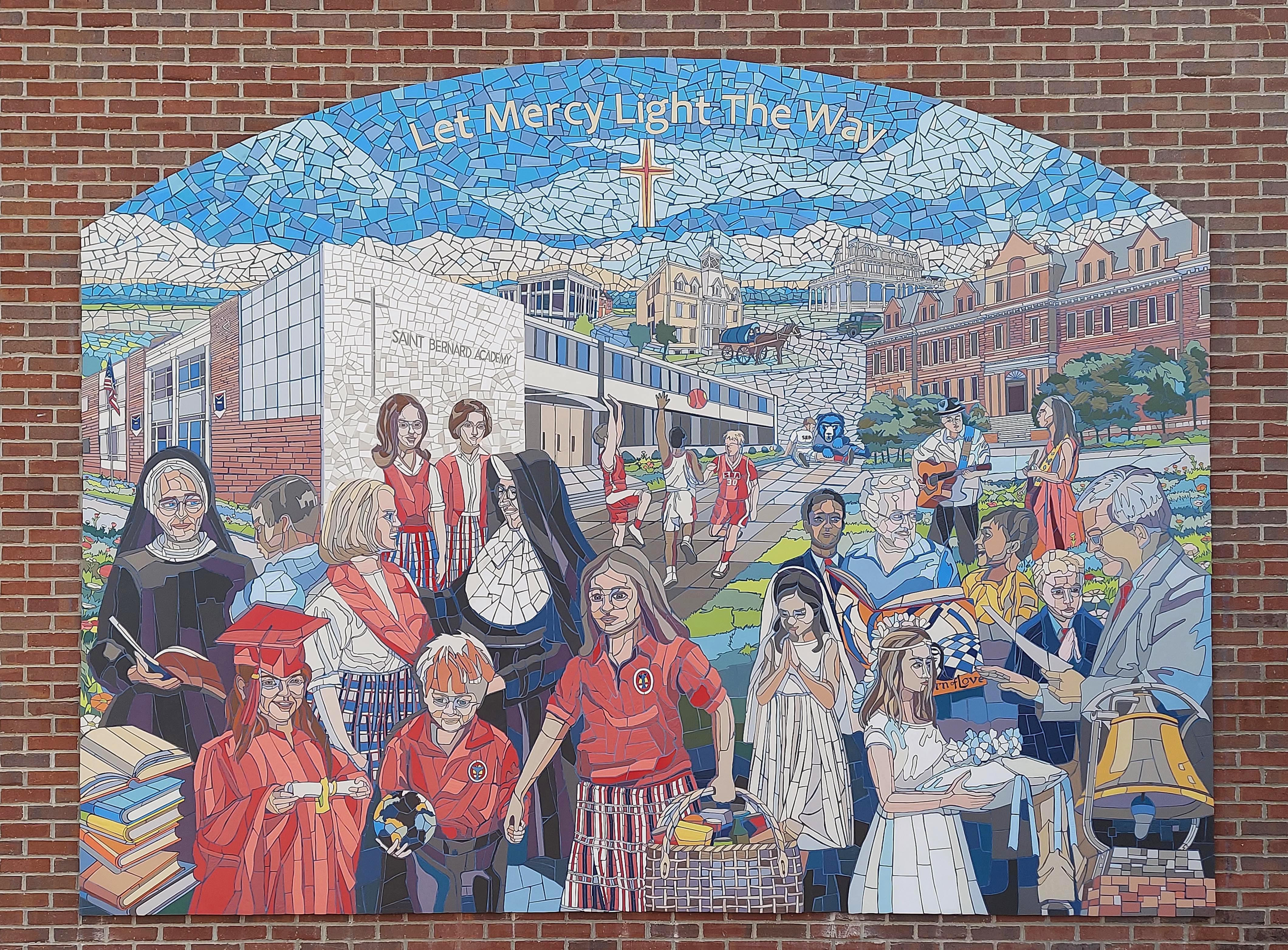
Over time, those connections led to regional exhibitions, public murals and large-scale commissions.
Looking back, Prado sees his artistic development reflected in Nashville’s evolution.
“Nashville has been an interesting city for me to live,” he says. “It’s grown culturally over time, really in parallel to my own personal growth as an artist. The grassroots artists of that day were very committed to building community and seeing Nashville become a more cultural place that is more supportive of visual artists.”
Many Creative Directions
Asked to describe his work, Prado speaks first of ideas rather than medium.
“My work reflects a fusion of colliding worlds,” he says. “Ancient and modern, Colombian and American, urban and rural, abstract and representational, fine art and cultural craft, external and internal, agony and ecstasy, protest and celebration.”
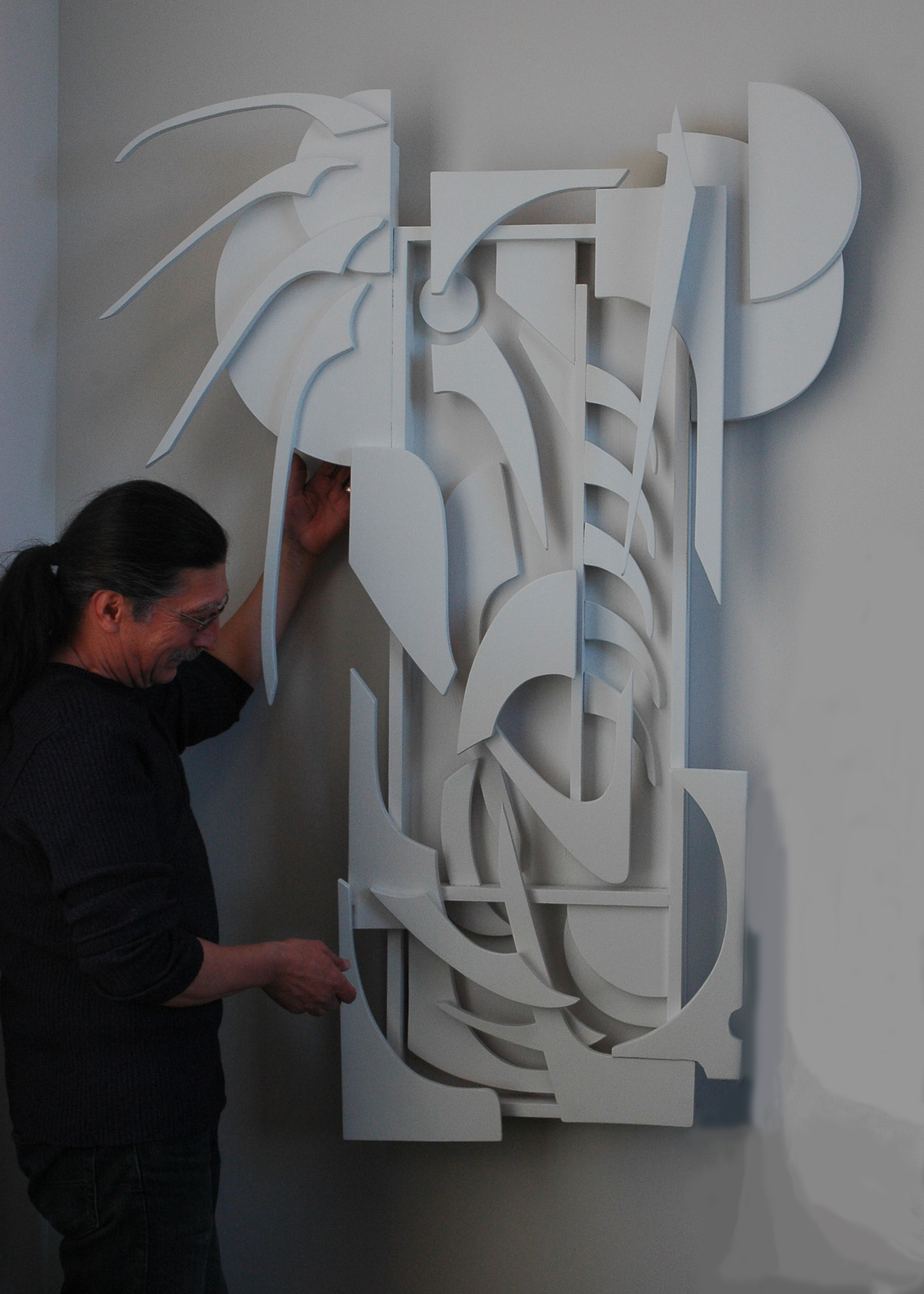
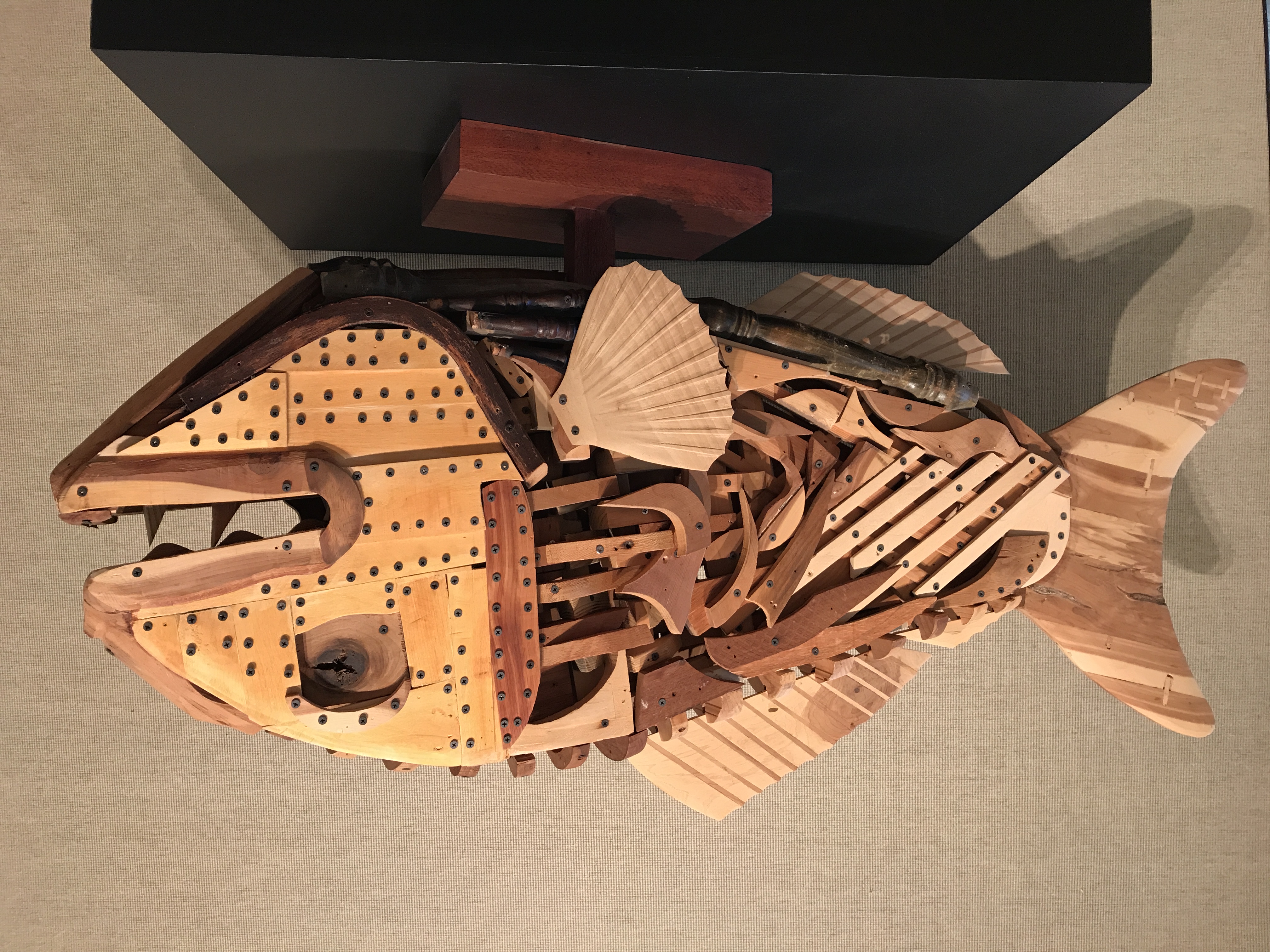
That outlook has led him across an unusually broad range of disciplines. His portfolio includes paintings, mosaics, wood sculpture, plaster figures, mixed-media constructions, textiles, etchings and public art.
Rather than pursue a single recognizable style, Prado allows the subject to determine the medium.
“I choose a particular medium or method based on the subject matter or the vision for the outcome,” he says. “I’m constantly exploring and looking to push the boundaries of what I already know and what I have already done as an artist.”
That philosophy runs counter to conventional artistic advice.
“Academic voices typically encourage artists to continually develop a singular style over time,” Prado says. “But my signature style has been crafted through the development of dozens of unique bodies of work.”
The approach has required him to keep learning new materials, techniques and processes.
“Out of this constant exploration has come a more expansive vocabulary of materials and processes that encourage originality and an emphasis on craftsmanship,” he says. “That has required a dedication to developing the technical skills needed to create effectively with each medium.”
Despite the variety, Prado points to two elements that consistently unite his work: color and movement.
“Color is a key element in much of my work,” he says. “Movement is another essential element.”
Through vivid palettes, diagonal lines and repeating geometric and organic forms, he wants viewers to experience more than an image.
“I want you to feel the work through your feelings, not just your eyes.”
His willingness to embrace unfamiliar media has led to some of the defining projects of his career.
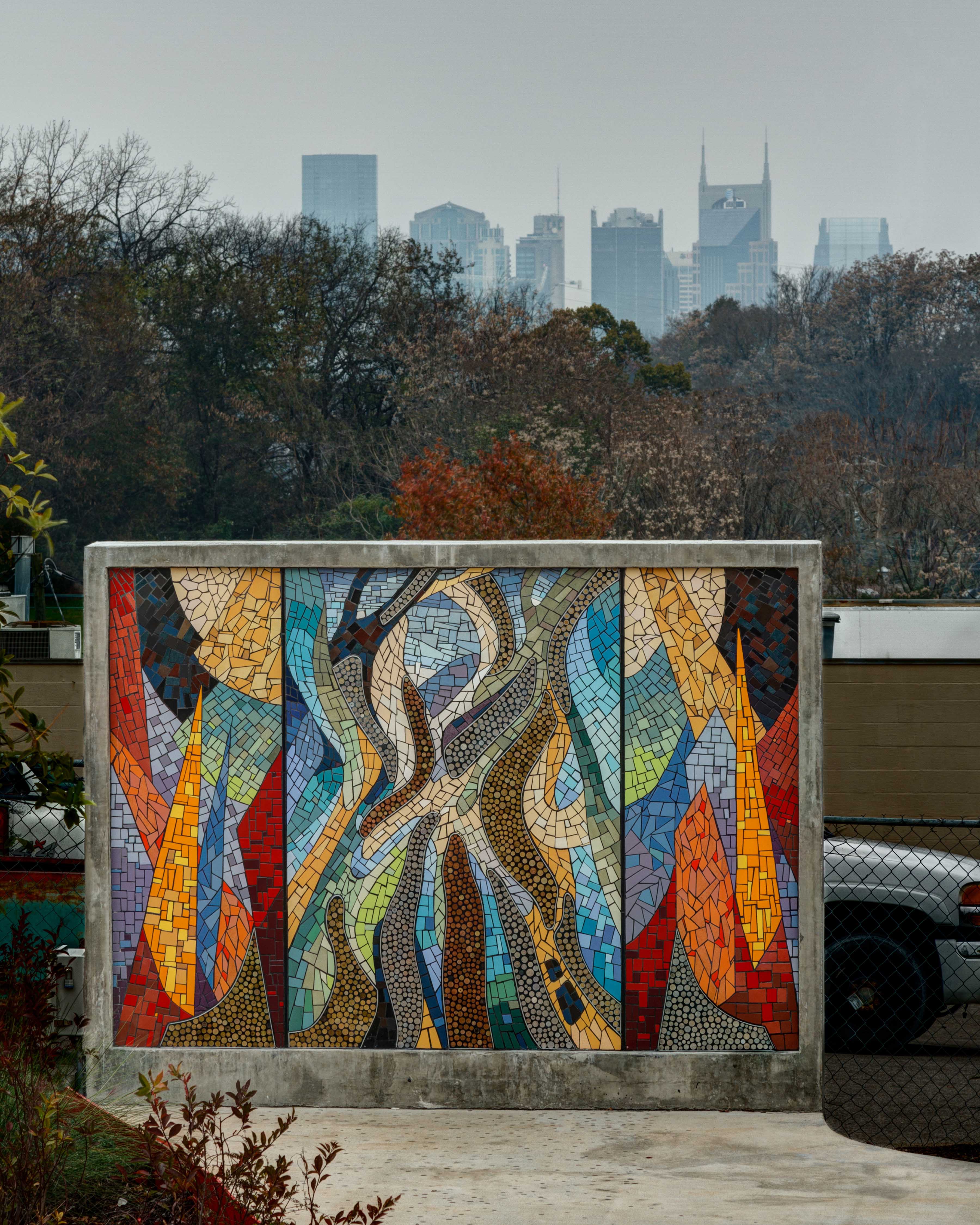
In 2010, Prado and his wife, Susan, accepted a commission requiring them to work in mosaic on a scale they had never attempted. The result was “Migration,” a 30-foot architectural mosaic created for the façade of Casa Azafrán Community Center.
“We dove headfirst into the deep end of that medium,” Prado recalls. “We had no real understanding of the learning curve we would need to take on, except the faith that ‘we’ll figure it out.’”
Mosaic offered both artistic and practical advantages. Unlike a painted mural, it could withstand decades of exposure to Nashville’s changing seasons. It also allowed Prado to apply lessons from painting, mixed media and sculpture to a new form.
The project became a turning point.
“It established us as real contributors to the portfolio of public art mosaics in America,” Prado says.
The work opened the door to additional commissions, including a terrazzo medallion installation at Nashville International Airport.
“The confidence that came from our work in mosaic translates to terrazzo, to concrete and plexiglass and all types of other mediums,” he says.
The Work of the Artist
For Prado, creating art has never been simply about inspiration.
It is about hunger — the determination to learn and the discipline to keep working.
As a young man, when he could not afford formal instruction, he found other ways to learn.
“I was very determined to be an artist even if that wasn’t the easiest or most acceptable path,” he says. “When there were no funds for me to enroll in art institutions, I would sit in as the guest of friends who were enrolled, on the back row of lecture halls and studio workshops, taking every available opportunity to grow my skill.”
Art gradually became more than an occupation.
“When I realized that art could be a tool for expressing all my emotions, life experiences and viewpoints, there was no going back.”
That commitment shaped the way Prado thinks about creativity.
“You have to decide to value the pursuit of your own creativity more than you value the circumstances in life that would try to discourage you from continuing forward,” he says. “And you have to put in the work.”
It is an idea he returns to often.
“The spirituality of the artist is cleaning brushes, developing the discipline and the consistency,” Prado says. “It’s not enough to have the idea; you have to do the idea.”
The same outlook extends beyond the studio. Prado believes artists should continue learning throughout their lives, regardless of experience or recognition.
“My work is still developing,” he says. “I enjoy exploring mediums and overcoming new challenges, which always makes the work stronger.”
As Prado became more established in Tennessee, he increasingly devoted time to helping others discover their own creative voices. His curiosity led him into classrooms, community centers, public art projects and mentorship — work that became as defining to his career as the pieces hanging on gallery walls.
Leaving a Cultural Legacy
Today, Prado continues to balance public commissions with personal studio work. While completing mural projects and developing new proposals, he has returned to paintings and mosaic sculptures that have waited for his attention.
More than four decades after arriving in Tennessee, he remains motivated by the opportunity to create work that challenges both himself and the communities he serves.
Prado believes his greatest legacy will be measured not only by the art he has created, but also by the creative community he has helped build.
Through exhibitions, public installations, teaching and community partnerships, he has supported other artists, created spaces for neighborhoods to tell their stories and contributed to Tennessee’s cultural landscape.
It is a legacy he hopes will continue long after individual projects are complete.
“I’ve been able to contribute to the creative landscape of this vibrant city in meaningful ways,” Prado says. “That is my legacy, and I hope to keep going and building and fulfilling all the dreams still left to do.”
To learn more about the work of Jairo Prado, visit the Prado Studio website and social media.