
Editor’s Note: This artist profile is part of a statewide series highlighting Tennessee artists participating in Ars Gloria, a visual arts initiative presented by the Tennessee Press Association and the Tennessee Art League. Follow Ars Gloria on Facebook and Instagram for additional artist features, competition news, and updates throughout the year.
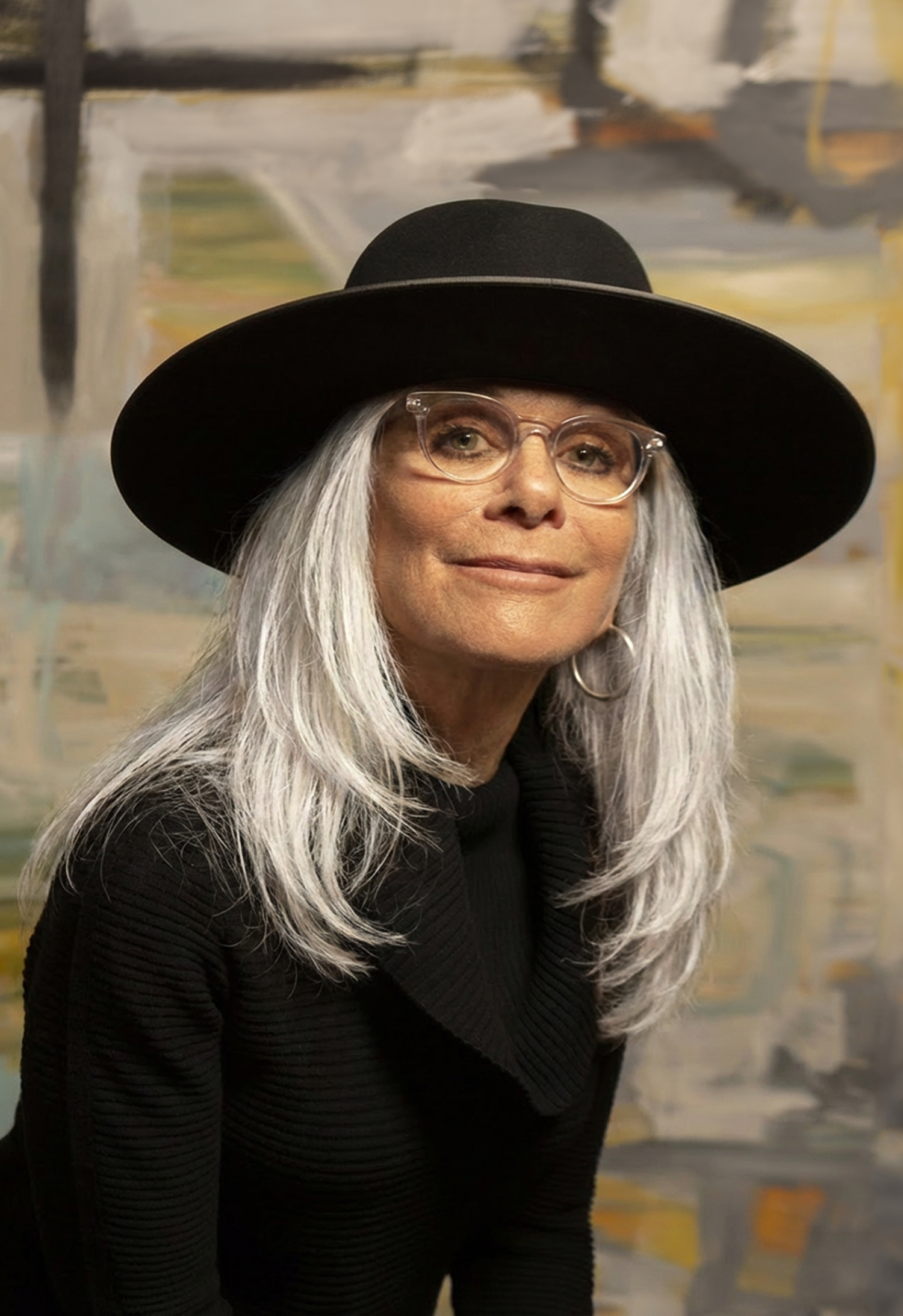
Photo by Lynn Goldsmith
For roughly six decades, Lynn Goldsmith has photographed some of the most recognizable figures in modern music.
Her images have appeared on hundreds of album covers and on and between the covers of some of the most influential American magazines of the past half-century, including Life, Newsweek, Time, Vanity Fair, and Rolling Stone. Her photography has earned significant honors, including a Lucie Award for Achievement in Portraiture, a World Press Photo award, and a Lifetime Achievement Award from Professional Photographers of America. Her work is also held in major permanent collections, including the Smithsonian’s National Portrait Gallery, the Museum of Modern Art, the Museum of Contemporary Photography, and the Rock & Roll Hall of Fame.
Yet throughout her career, Lynn has repeatedly pushed back against attempts to define her by any single label.
“I’m very put off by labels of any sort because I feel that what a person is doing when they label somebody else to a certain genre is limiting who that person is,” Lynn says.
She has certainly photographed musicians. But that does not explain how she has bonded with subjects, formed lasting creative and personal relationships—including a decades-long friendship with Patti Smith—or worked across painting, film, music, publishing, gallery operations, and photo licensing.
People, she argues, want artists to be one thing. Her own career has consistently resisted that demand.
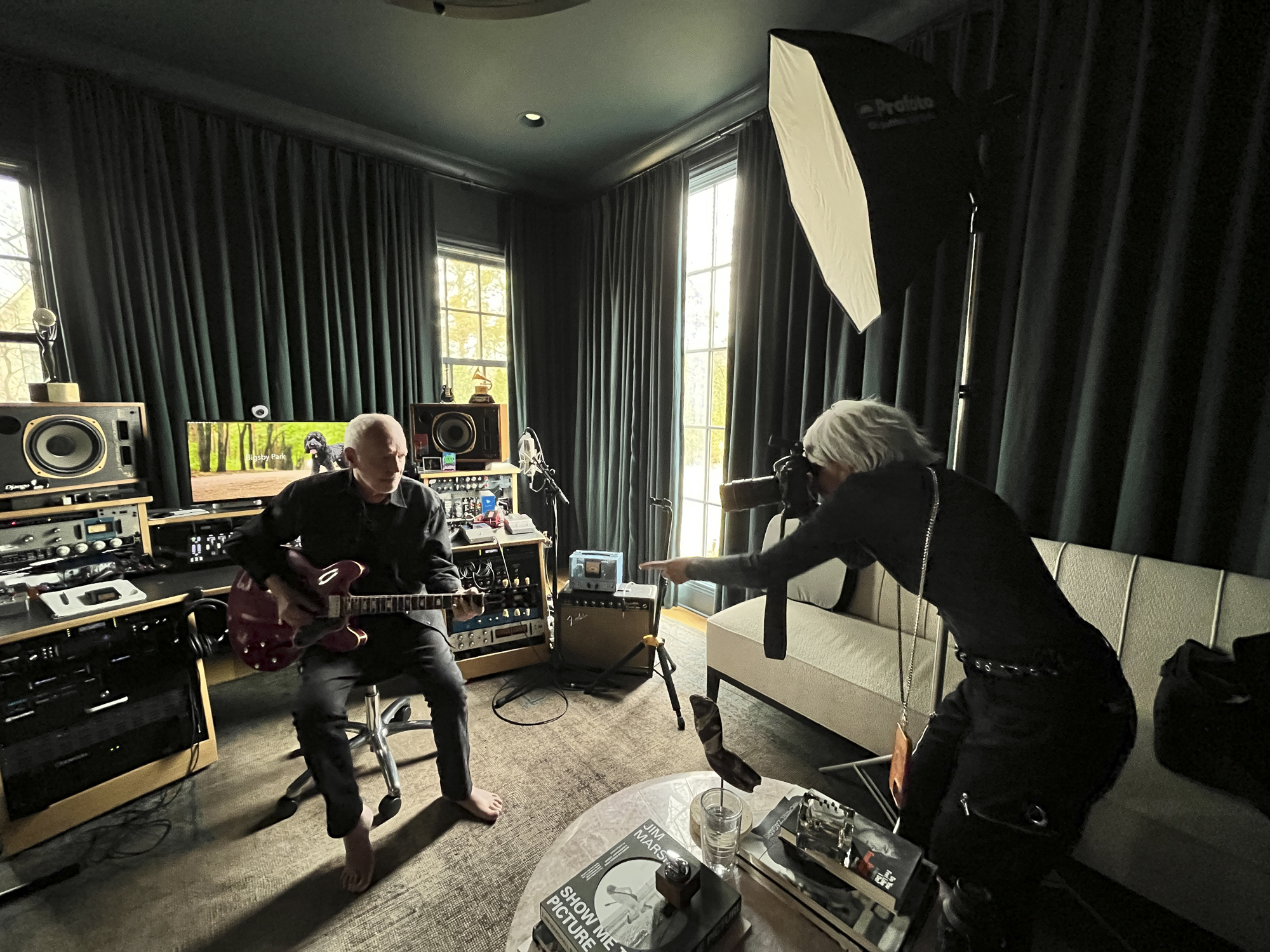
Photo by Brandon Greer
From Detroit to Miami Beach
Lynn was born in Detroit in 1948. Her parents divorced when she was about four, and she grew up primarily with her mother and sister.
Her father remained part of her life. An amateur photographer and filmmaker, he maintained a darkroom at his home in Ann Arbor. When she visited, Lynn often watched him work.
Seeing her interest, he gave her a Kodak Baby Brownie camera of her own.
But she was already studying people. As a child, she remembers comparing herself to her sister and forming theories about how appearance might reveal personality.
In fourth grade, she noticed that one teacher repeatedly ignored her raised hand while calling on students wearing eyeglasses. Although she didn’t need them to see, she asked her mother for glasses anyway.
She wore them to class. Suddenly, the teacher started calling on her.
Around age 14, Lynn’s mother remarried, and the family moved to Miami Beach. Lynn did not initially welcome the change.
Then, in February 1964, her stepfather arranged for her to see The Beatles at Miami Beach’s Deauville Hotel.
While waiting in the lobby, she became fascinated with the Art Deco carpeting and began photographing it. When the band entered, she noticed they were wearing boots like the ones she had seen James Brown wear.
So she photographed their feet against the hotel carpet.
John Lennon asked, “Don’t you want our faces?”
She shook her head. Lennon winked at her.
The image later appeared on the Miami Herald’s front page, becoming her first published photograph.
No Single Direction
Despite that early success, Lynn did not leave high school planning to become a professional photographer.
She attended the University of Michigan, where she studied English and psychology, graduating magna cum laude in 1968 after three years with degrees in both subjects.
Music remained important. By her sophomore year, she was singing and playing bass in The Walking Wounded, a five-person band that performed covers and traveled to New York to play venues including Cafe Wha? By then, she had also been writing songs for years.
After graduation, Lynn returned briefly to Miami Beach and spent about six months working as a substitute high school English teacher. Then she left for New York.
She arrived around 1969 believing her future might be in filmmaking. Photography was still not the career she was pursuing.
Film, Television, and an American Band
In New York, Lynn began looking for a way into film production. That search led her to Elektra Records, where founder Jac Holzman gave her room to work in promotion, develop radio concepts, and make short 16-millimeter films involving artists including The Doors and Judy Collins. She later made similar work involving Delaney & Bonnie.
“I’ve really been doing the same thing all along, which is scripting things in my mind,” she says. “They either become films or moving images or still images.”
By 1971, she was directing for Joshua Television, which used large-screen video projection in concert venues. The following year, she directed for ABC’s “In Concert.”
While directing for “In Concert,” Lynn encountered Grand Funk Railroad during a period of transition for the Michigan band. Drawing on her experience in promotion and marketing, she began developing ideas around how the group could be presented to audiences.
She says she helped shape the “We’re an American Band” campaign, co-directed a promotional film, and connected the band with producer Todd Rundgren.
“We’re an American Band” became Grand Funk’s first No. 1 single on the Billboard Hot 100, and she continued working with the group as part of its management team.
Her involvement extended into the band’s next album, “Shinin’ On,” for which she helped develop a three-dimensional cover concept packaged with 3-D glasses.
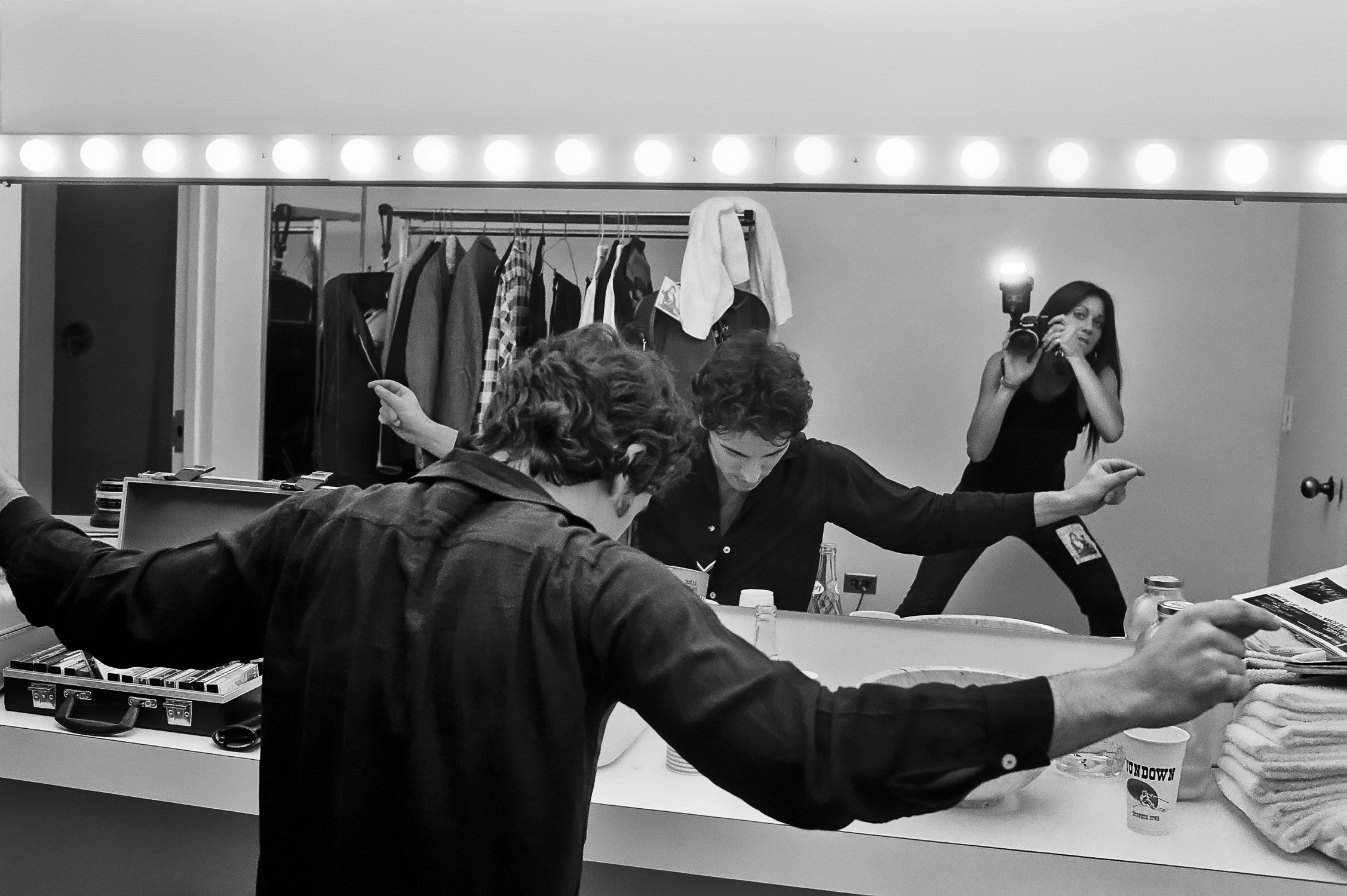
Photo by Lynn Goldsmith
A Market for Pictures
By 1976, Lynn was ready to leave management. Photography offered greater independence and access to a worldwide market for licensed images.
She began carrying her photographs around New York to publications including Newsweek, Time, and Life. Soon, other photographers began asking her to take their work along, too.
That year, she founded LGI Photo Agency.
The idea was practical, but also collective. Lynn believed photographers could be stronger together, and she saw an opening in a market where larger agencies focused primarily on news. LGI became the first photo agency centered on celebrity portraiture.
She wanted it to become the first call for celebrity photography: “If it’s celebrity, let’s call LGI.”
Photography also gave Lynn a way to support herself while continuing to paint.
“Photography and the other things that I did supported me so I could paint without thinking or caring about whether I ever showed or even sold paintings,” she says.
Making, Not Taking
As photography became her profession, Lynn began drawing a distinction between taking a photograph and making one. Ansel Adams famously argued, “You don’t take a photograph, you make it.” Lynn uses the same language, but defines the difference through intention.
“I’m more about thinking: What is the purpose of the photograph? What am I trying to get other people to experience?” she says.
Someone taking a photograph, in Lynn’s interpretation, may simply document a person, place, or moment as it exists. She does not consider one approach inherently better than the other. She has worked in documentary settings herself, including National Geographic assignments where photographers were expected not to interfere with what unfolded before them.
But most of her own work is more deliberately constructed. That instinct, too, reaches back to childhood. Lynn remembers dressing her dolls and imagining identities for them—deciding, for example, whether one might be an ice skater.
“I did the same thing as an adult in making pictures,” she says.
That same interest in constructing and exploring identity carried into the form that would define much of her photographic work: portraiture.
“If people need to get a handle on what I do, I would say that the majority of my photography is portraiture,” she says.
Over the decades, her subjects have included Bruce Springsteen, Patti Smith, Bob Dylan, Prince, Michael Jackson, Bob Marley, Tina Turner, the Rolling Stones, Frank Zappa, Ozzy Osbourne, Madonna, Johnny Cash, Dolly Parton, Miles Davis, Grace Jones, Jim Belushi, Bill Murray, Glenn Close, Robin Williams, John Waters, Jim Henson, William Shatner, Helena Bonham Carter, Diane Lane, Martin Scorsese, Allen Ginsberg, Ansel Adams, Muhammad Ali, Madeleine Albright, and author Isaac Bashevis Singer.
And to Lynn, this idea of portraiture extends beyond people. She says she can even approach inanimate objects as portraits.
Her psychology background also informs how she works with human subjects. She imagines how people see themselves, how they want others to see them, and what they actually want.
During a session—especially with someone accustomed to being photographed—she tries to put herself in the subject’s position.
“The best images are made with collaboration,” Lynn says.
Hangin’ Tough
That respect also extends to the audience.
In 1990, Lynn published “New Kids on the Block” by Rizzoli. A coffee-table book on the band, it became a bestseller.
The project began after Lynn realized she had been dismissing the enormously popular group without having listened to their music or attended a concert. Concluding that this was unfair, she decided to see New Kids on the Block live.
What she encountered was a massive crowd of young fans whose enthusiasm challenged her assumptions.
“I have a big, big respect for fans because the fan is very much in touch with unconditional love,” she says.
Their enthusiasm reminded Lynn of being a young Elvis Presley fan herself—and of her disappointment with many of the cheaply produced books marketed to teenagers.
She decided New Kids on the Block fans deserved something made with real care, with the quality afforded to more critically acclaimed or prestigious musical acts.
That decision carried some professional risk. Lynn says people questioned why a photographer associated with artists such as Bob Dylan and Bruce Springsteen would photograph New Kids on the Block.
After all, wasn’t she a “rock-and-roll photographer”?
Lynn was unfazed.
“I’ll shoot anybody,” she says. “I don’t look at someone like, ‘You’re not worth it.’ I think everybody’s worth it.”
To her, cultural status was beside the point. The people who cared about the music still deserved work made with seriousness and respect.
And it proved to be the right call: “New Kids on the Block” spent eight weeks on The New York Times bestseller list.
Fighting for the Image
Years later, questions of how photographs are made, used, and valued would place Lynn at the center of a major copyright dispute.
In 1981, she photographed Prince for Newsweek. Three years later, Vanity Fair licensed one of her studio portraits as an artist reference for Andy Warhol, who used it to create an illustration of Prince. Warhol ultimately created 15 additional works based on the photograph, which, together with the Vanity Fair image, became known as the “Prince Series.”
Lynn says she did not learn of that series until 2016, after Prince’s death, when Condé Nast licensed one of Warhol’s images—“Orange Prince”—from the Andy Warhol Foundation for a commemorative magazine. The Foundation received $10,000 for the license. Lynn received neither a fee nor a source credit.
After Lynn notified the Foundation that she believed her copyright had been infringed, the Foundation sued her, seeking a declaratory judgment of noninfringement or, alternatively, fair use. Lynn counterclaimed for infringement.
“The Warhol Foundation sued me. I didn’t sue them,” she says.
The Foundation argued that Warhol’s Prince Series added new expression, meaning, and message to Lynn’s photograph, making the works transformative and supporting its argument for fair use under copyright law.
The dispute eventually reached the U.S. Supreme Court. In May 2023, the Court ruled 7-2 that the first factor in the fair-use analysis favored Lynn when applied to the Foundation’s commercial licensing of “Orange Prince” to Condé Nast. The Court expressly limited its ruling to that use rather than every creation, display, or sale involving Warhol’s Prince Series.
For Lynn, the fight was not abstract. She estimates that she spent around $3 million on the litigation.
“I felt I was not going to be bullied,” she says.
She also saw the case as larger than herself. Copyright, in her view, is part of what allows photographers and other artists to control and earn from the work they create. She says the rise of generative artificial intelligence gave the fight added urgency.
Lynn has maintained a GoFundMe supporting her copyright fight to help offset the legal costs associated with the case.
“If we don’t tighten copyright law, we’re going to have no copyright,” she says.
Making Something with a Friend
If the Warhol case centered on control over an image, one of Lynn’s more recent projects reflects the opposite idea: creative work built through trust and collaboration.
“Patti Smith: Before Easter After,” published by Rizzoli in a trade edition in 2024, pairs hundreds of Lynn’s photographs with Smith’s poetry and song lyrics. The images trace Smith through performances, studio sessions, and private moments during a formative period of her career.
The project also grew from a relationship spanning five decades.
“That book is different from any of my other books because Patti and I very much did it together,” Lynn says.
Smith contributed new poems, lyrics, and other writing to accompany Lynn’s images. Lynn says the two share—or at least understand—a similar visual sensibility extending even to choices involving typography, paper, and layout.
For someone who places such importance on collaboration, her explanation of the experience is strikingly simple.
“It was great because it was just making something with my friend.”
Pattern Interrupt
Nashville has given Lynn another kind of creative experiment.
She still maintains her New York loft, but says that roughly every 20 years, she makes someplace else her primary home. Colorado was one such move. Nashville became another.
She calls the practice a “pattern interrupt”—a deliberate attempt to place herself somewhere unfamiliar and disrupt assumptions that might otherwise harden into certainty.
The choice of Tennessee carried some of the same self-questioning that took her to a New Kids on the Block concert decades earlier. She realized she had formed opinions about the South without really knowing it.
“When that happens, I go: Why do you make these judgments?” she says. “Go live there and find out what it is.”
The move has also given her space to work. Lynn continues to paint, make photographs, and pursue projects extending beyond the rock photography for which she is best known. She has discussed books involving flowers, self-portraits, and images from a National Geographic assignment documenting the Circus Parade.
There are other reminders of the range hidden by labels. Lynn was once a recording artist for Island Records under the name Will Powers. Music, painting, photography, film: the medium may change, but the impulse behind it has remained remarkably consistent.
At this stage, she says the outcome matters less than the making.
“I don’t really care about being published,” Lynn says. “I don’t care about being in galleries or being sold. I just want to make work because the process of making it teaches me so much.”
After roughly six decades of resisting other people’s definitions, that may be the simplest description of Lynn Goldsmith available.
She makes things.
For further information about the work of Lynn Goldsmith, visit her website and social media.