Editor’s Note: This artist profile is part of a statewide series highlighting Tennessee artists participating in Ars Gloria, a visual arts initiative presented by the Tennessee Press Association and the Tennessee Art League. Follow Ars Gloria on Facebook and Instagram for additional artist features, competition news, and updates throughout the year.
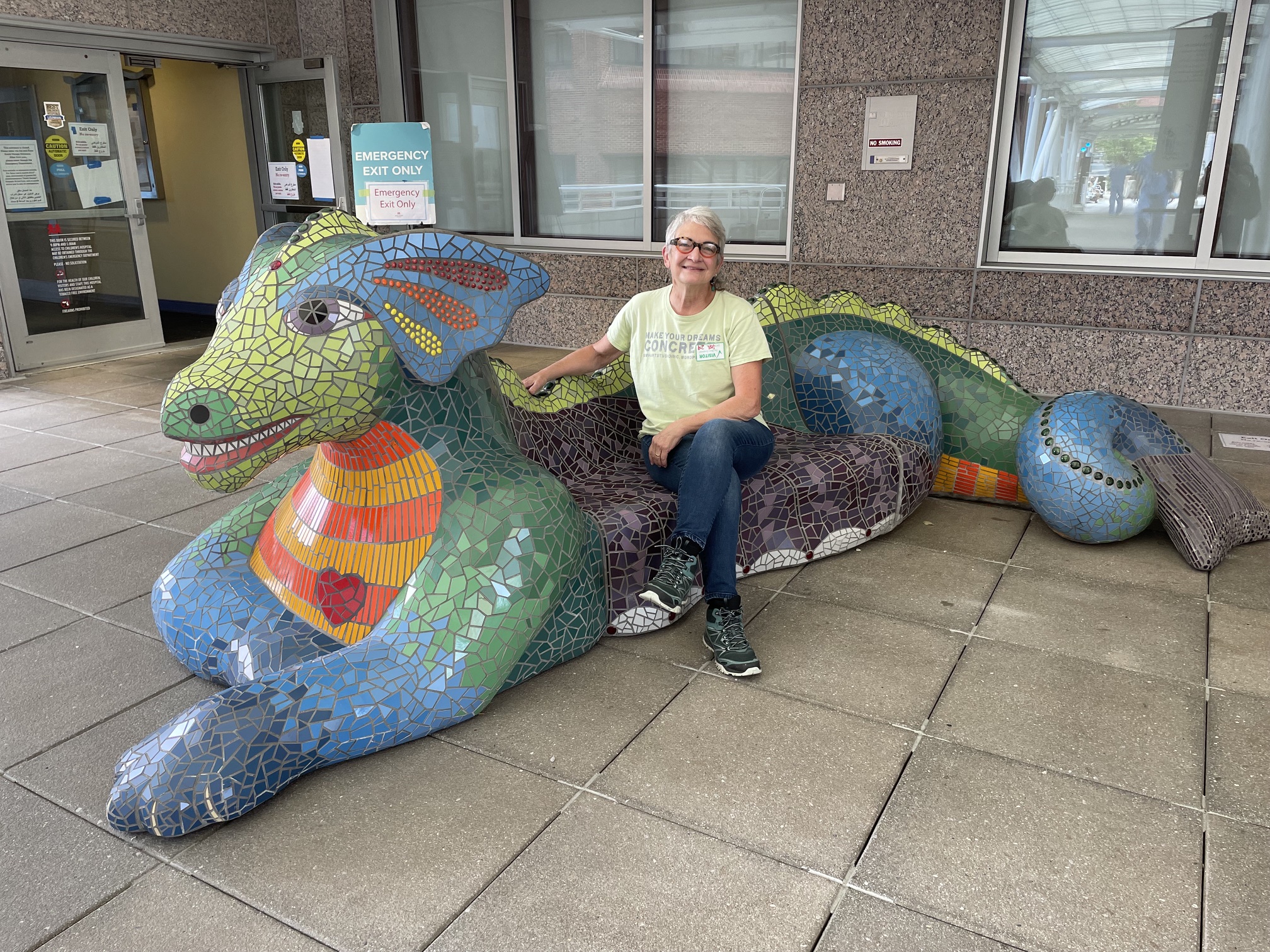
Mixed-media sculptor and public artist Sherri Warner Hunter has spent decades creating large-scale community installations across the country.
Known for work that is colorful, whimsical, and often inviting physical interaction, her practice blends concrete sculpture, mosaic, and other materials. Over the course of her career, Hunter has taught, written several books on the creative applications of concrete, and completed major public commissions. Her art has earned statewide and national recognition, including a 2019 CODA Awards Top 100 selection and a 2021 Best of Tennessee Craft Merit Award.
Yet for all of her success, Sherri’s career was hardly assured.
After moving to Tennessee, Sherri gave herself five years to establish a career as an independent artist. She would teach, sell her work, pursue commissions, and do whatever she could to make a living through art. If it didn’t work, she would find a job and make art on the side.
At four years and eleven months—one month before her self-imposed deadline—Sherri received her first public art commission through a statewide competition to create a sculpture for one of Tennessee’s Interstate Welcome Centers.
Reflecting on the deadline, Sherri says that she “almost” missed it.
“Almost,” she says. “But the Universe was watching out for me.”
Childhood Crafts
Born in Salt Lake City, Utah, Sherri grew up with her family in the East, primarily in Pennsylvania, outside of Philadelphia.
She grew up in a family where making things was simply part of life. “I consider myself very lucky because I had a family that really valued hand-making processes,” she says.
Every October, her father would begin assigning projects the family could make as personal Christmas gifts. Made with love and care, these gifts included ornaments, caned stools, and woven mats.
While gifts and decorations were for the holidays, everyday domestic life included gardening, cooking, canning, and sewing. That comfort with materials eventually shaped the way Sherri approached art.
That openness to learning also had roots outside the home. When Sherri was in third grade, her mother became seriously ill with encephalitis and was hospitalized.
In the years that followed, several adults took a particular interest in her, aware of what her family had experienced.
One of them was Becky Desmond, her junior-high art teacher.
“She continued to mentor me and include me in non-school activities that were very artistic,” Sherri says. “We remained friends over the years.”
Desmond became one of the first in a succession of teachers and mentors who would help shape Sherri’s artistic development.
In college, Sherri enrolled at the Kansas City Art Institute (KCAI) in 1970. Entering the program, she expected to become a painter. The foundation program, however, encouraged students to broadly explore creative interests, and Sherri found herself interested in sculpture.
One instructor—the acclaimed artist and educator Willem Volkersz—introduced her to vernacular architecture, folk art, outsider art, and environments built by self-taught artists.
That exposure remained a lasting influence. Years later, Sherri would describe being especially drawn to art that changes how people move through and experience a space rather than simply asking them to look at an object.
Those early influences became part of a cumulative learning process that would shape Sherri’s career: childhood making, mentorship, formal art education, new materials, professional experience, and eventually the lessons she would pass along herself.
At KCAI, however, learning would not always come easily.
Go Big or Go Home
At the time Sherri attended the institute, its sculpture department was overwhelmingly male.
She remembers it being jokingly referred to as the “I-beam and railroad-tie school of sculpture.”
The environment toughened her. “It was not for the faint of heart,” she says. “One had to develop a thick skin for criticism, whether it was warranted or not.”
Sherri, meanwhile, had little interest in learning welding or following the dominant model of sculpture around her. Instead, she gravitated toward materials and techniques that drew on skills she already knew, particularly sewing.
While the department chair, Dale Eldred, was traveling on a Fulbright Scholarship, a clean room was being prepared for electronics. Sensing that it should serve another purpose, Sherri commandeered the space, converting it into a sewing room.
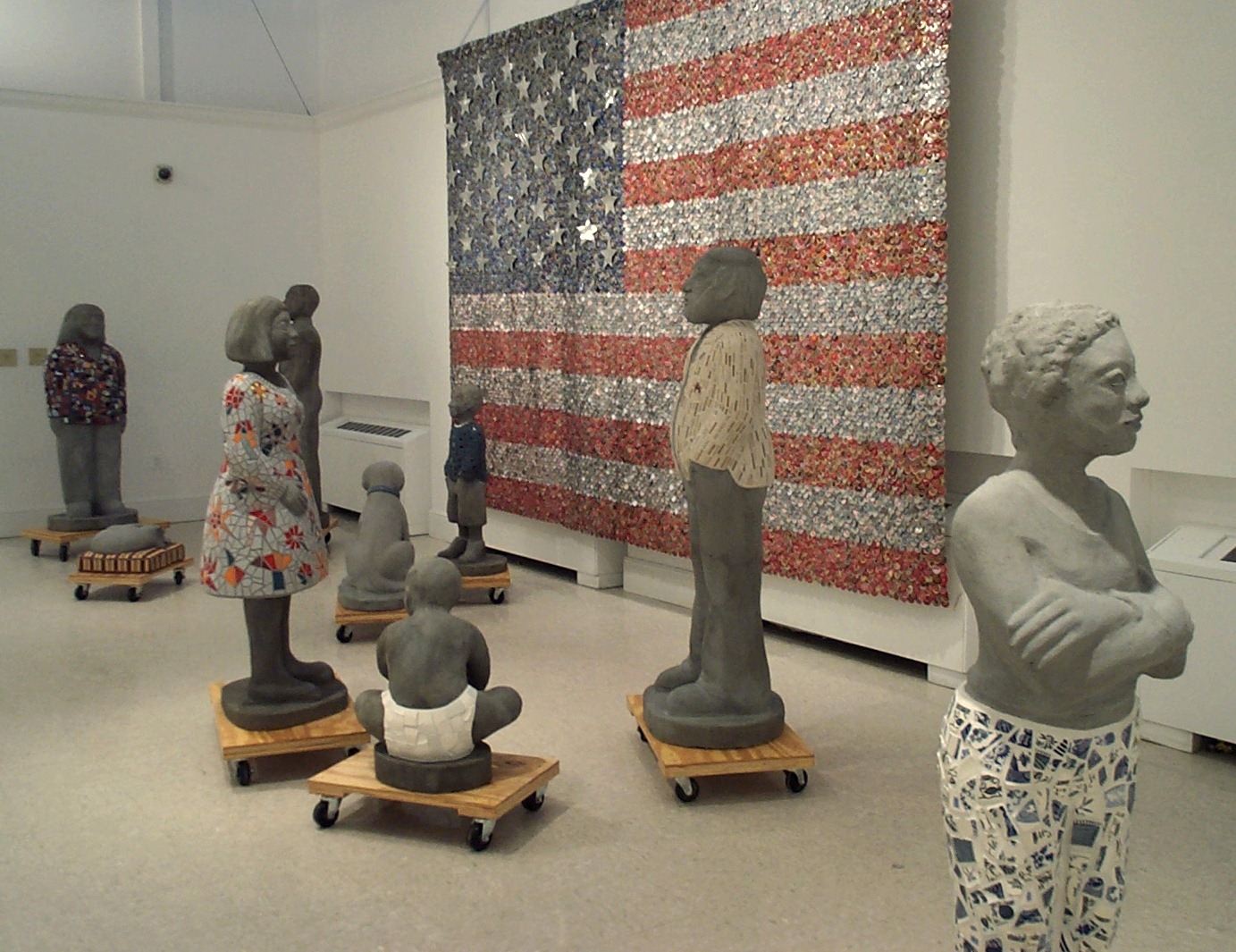
After the conversion, other students gravitated to the new ‘sewing room’ to create large-scale soft sculpture and fabric installations.
“When the department chair came back, he was not especially pleased,” she says.
Several factors likely contributed to the tension. The students had overridden the faculty’s intended use for the space, and fabric still carried strong domestic and feminine associations. But the work emerging from the sewing room challenged those expectations. Rather than making small or delicate pieces, the students often worked at a monumental scale.
Some installations were even large enough for people to walk through them.
The sewing room gave students like Sherri a place to build from the skills and instincts they already had. Instead of abandoning those abilities, they could use them as a starting point for sculpture and installation.
“At the time, the work coming out of that room was often regarded as some of the strongest work in the department,” she says.
There was also a broader principle at work. Students like Hunter were not attending KCAI simply to become the kinds of artists the department expected them to be. They were there to discover the kinds of artists they wanted to become.
This meant finding the materials, techniques, and language that would allow them to make work on their own terms.
The experience also helped turn Sherri into an advocate for other artists.
Her concerns extended beyond gender. She began pushing for art students to receive practical professional training that could help them thrive outside the classroom: how to write a résumé, prepare an artist statement, approach galleries, and understand the business of sustaining a career.
“I was looking for the tools to be a professional artist,” she says.
Finding Success Out West
Sherri’s initial plan after graduating from KCAI was to continue her education. She was invited to apply to the prestigious Cranbrook Academy of Art in Bloomfield Hills, Michigan, a graduate school known for its programs in art, architecture, and design, by the chairman of the textile department, Gerhardt Knodel, after he visited KCAI and viewed her work.
Sherri was accepted to Cranbrook but realized she could not afford to attend. Forced to pivot, she eventually narrowed her options to two destinations: New York City or Los Angeles.
Recalling the decision, she says, “I figured, ‘I’d rather be warm if I was going to be a ‘starving’ artist.’”
Opting to move to L.A. in 1974, Sherri quickly found opportunities that might not have been available to her elsewhere at that stage of her career. She freelanced, helped establish galleries, pursued a graduate degree at Claremont Graduate University, curated exhibitions, and lectured through University of California art departments on professional development for artists.
In many ways, the city became a testing ground for questions Sherri had already been asking as an undergraduate student: How does an artist actually build a sustainable career?
Years later, Sherri remains reluctant to prescribe a single path for younger artists.
If someone feels drawn to a major city and has the means to make the move, she sees no reason to resist the idea.
“If you’ve got the fire and the resources, give it a try,” she says.
At the same time, she believes the landscape has changed. Technology now allows artists to build audiences, maintain professional networks, and participate in creative communities from places that would have been far more isolating in 1974.
“There’s not a formula that’s going to work for everyone.”
After roughly a decade in Los Angeles, Sherri returned to Kansas City and eventually became Career Services and Alumni Director at KCAI. In that role, she established the school’s first credited professional-development class.
It was a bookend moment for Sherri. As an undergraduate, she had pushed for artists to receive better preparation for life beyond school. Years later, she returned to KCAI in a position where she could help build exactly that kind of support.
The work was meaningful, and Sherri was able to influence how KCAI prepared young artists for professional careers. From that position, she transitioned into the Director of Continuing Education, developing both adult and children’s arts programs. But the deeper she moved into arts administration, the further she found herself drifting from her own studio practice.
Eventually, she would leave the institute and return to making art.
A Studio in the Country
After returning to Kansas City, Sherri met her husband, Martin. Working in the printing industry, Martin would eventually be offered a job in Nashville.
Martin and Sherri discussed the offer, with Sherri agreeing to relocate to Music City under one condition: “If we move for your job, the next move is for my job.”
And this is when Sherri decided to give herself five years to establish herself as an independent artist.
She would teach, sell her work, pursue commissions, and do whatever she could to make a living through art. If it didn’t work, she would find a job and continue making art on the side.
With that understanding in place, the couple left Kansas City for Nashville and settled in East Nashville. Once there, Sherri continued teaching, developing her studio workshops, and selling her work, and at one point enrolling at Nashville Tech.
Her reason for enrolling was practical: she wanted to learn how to weld.
It was the same technique she had resisted at KCAI. Now, however, Sherri was approaching it on her own terms and because her evolving practice demanded it.
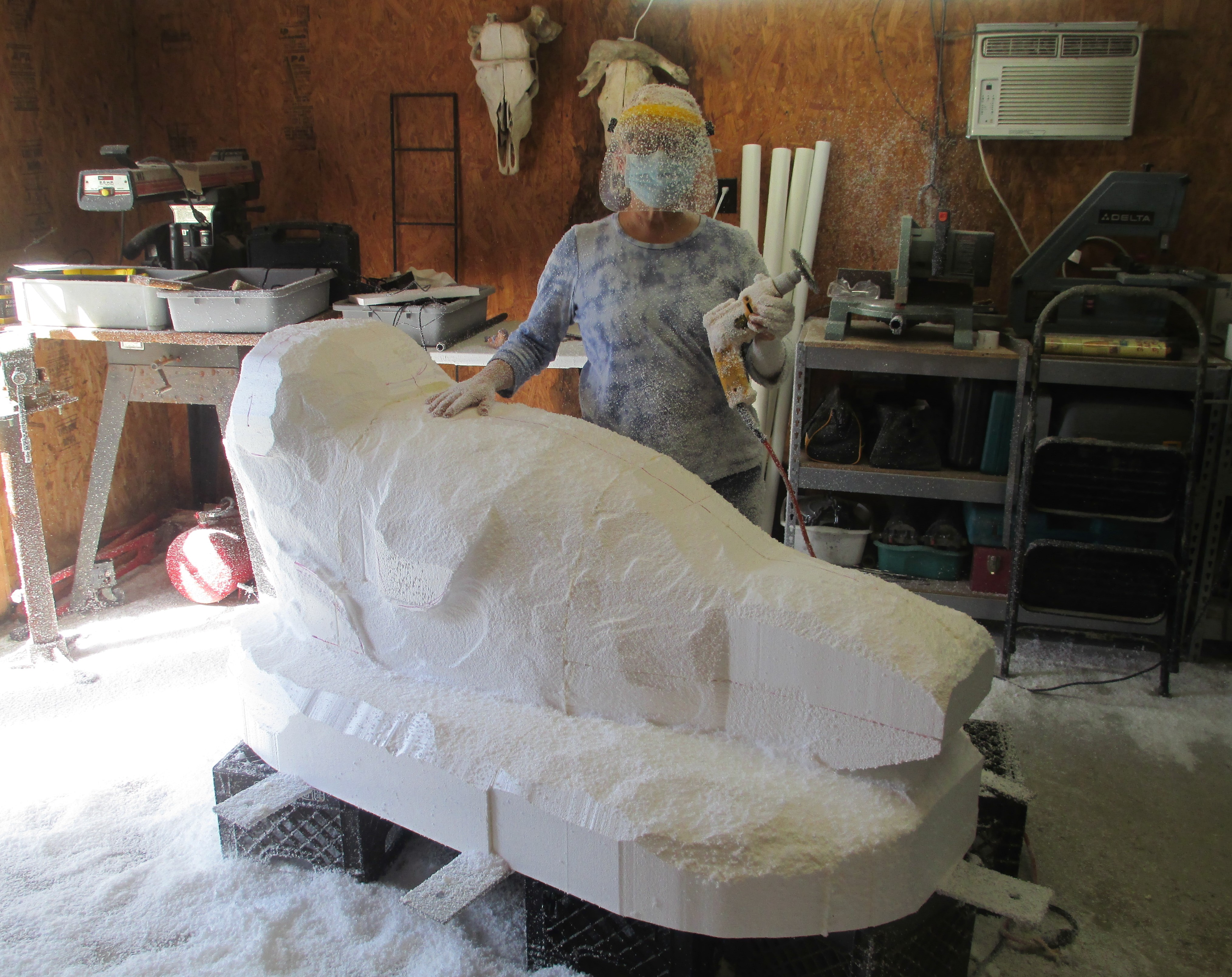
By this point in her career, she had also become increasingly comfortable learning new processes on her own, most notably, concrete. Sherri explains that one of the most valuable things art school had given her was not mastery of any single material, but the ability to teach herself what she needed to know.
Her welding training soon proved useful. Around that time, a visual arts coordinator at TAC, Victoria Boone, told Sherri that bronze sculptor Russ Faxon was looking for an assistant in Bell Buckle—someone who could weld and work across different media. Sherri possessed exactly that mix of skills.
Faxon was then working on his Roy Acuff and Minnie Pearl commission for the Ryman Auditorium. Sherri assisted with some welding and with modeling details on Minnie Pearl’s ruffles and flowers.
The work brought her regularly to Bell Buckle.
“Boy, it sure gets pretty once you get past Murfreesboro,” she remembers thinking.
Eventually, she asked Faxon if he knew of any property for sale. He told her about a farm that was available. The owner was a mechanic known as “Sweet Pea” who used the property to repair cars. Car parts were scattered about, while the house and surrounding buildings had fallen into disrepair. Some of the windows were covered with plywood.
When Sherri visited the property, she did what she had done before at KCAI: she looked past its present condition and saw what it could become. Excited, she informed Martin, who later made a special trip out to the property on his motorcycle so he could inspect it for himself.
Within days, they made an offer to Sweet Pea. By New Year’s Day 1989, they were living in Bell Buckle.
Reading the Vibe
Four years and eleven months later—just one month before her self-imposed deadline—her first public art commission arrived.
That first commission did more than validate Sherri’s five-year gamble. It opened the door to a new phase of her career.
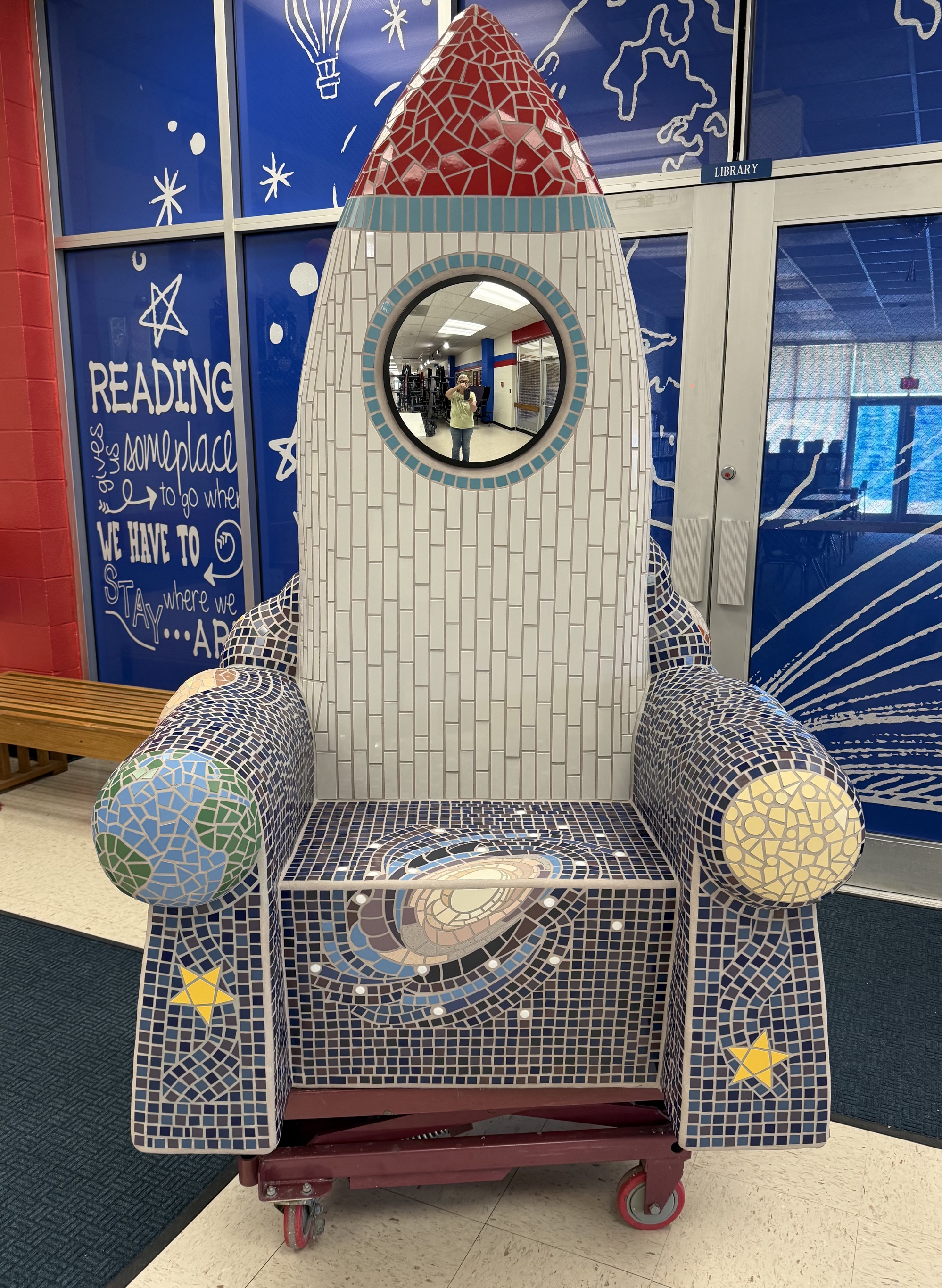
As public-art commissions became a regular part of her work, Sherri found that many required something she considers central to her practice: an understanding of how others will engage with her work.
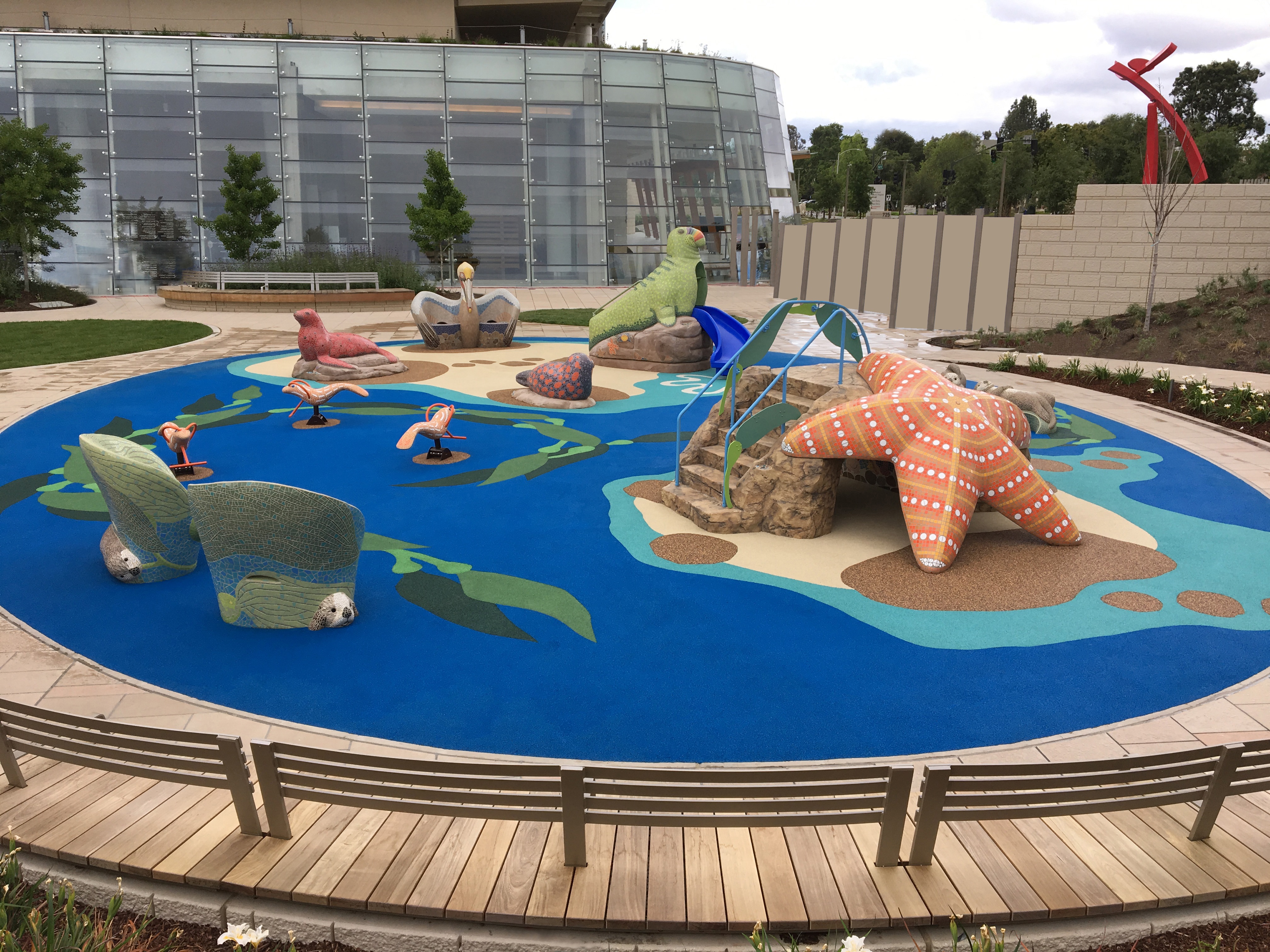
One example is “The Gathering,” now installed at William Edmondson Park in Nashville. Created in 2001 with Oasis Center staff, students, and community volunteers, the work involved Sherri training teenagers in Oasis Center’s PULSE program—People United Leading and Serving Everywhere—to serve as mosaic assistants.
That interaction matters to Sherri. Some of her sculptures can be sat on. Others can be climbed. Whether designed for sitting, climbing, or simply moving around, many of Sherri’s sculptures defy the expectation that viewers should simply stand back and look.
Another commission—“Ward’s Lobster”—required a different kind of attention altogether. Created for Bell Buckle’s Ward Anderson Playground, the piece memorializes a young child who died in a drowning accident.
Sherri knew the design would have to be approached carefully. Her first instinct was to make the lobster red, since that was the color most people associated with lobsters. But living lobsters can actually display a range of colors, while the familiar red is associated largely with cooked lobsters.
Her solution? Prepare two proposals: one featuring a red lobster and another using pastels. She presented both options to the people involved and invited them to choose.
During that process, Sherri learned that Ward had liked the color red and that his grandfather had taken him to Red Lobster. With that added context, the decision became clear: the lobster would be red.
“When I do a commission, I listen to a lot of different voices,” she says. “I try to fold everything together to create a piece that resonates not just with me, but with the community at large.”
Making, Mistakes, and Moving Forward
Sherri has spent much of her career teaching others, sharing techniques, and learning through experimentation. Russ Faxon once asked how she could give away all her secrets. Sherri never saw much reason to guard them.
“There is always a lineage,” she says. “Somebody taught somebody something, and they took it, and they changed it, and then the next person changes it.”
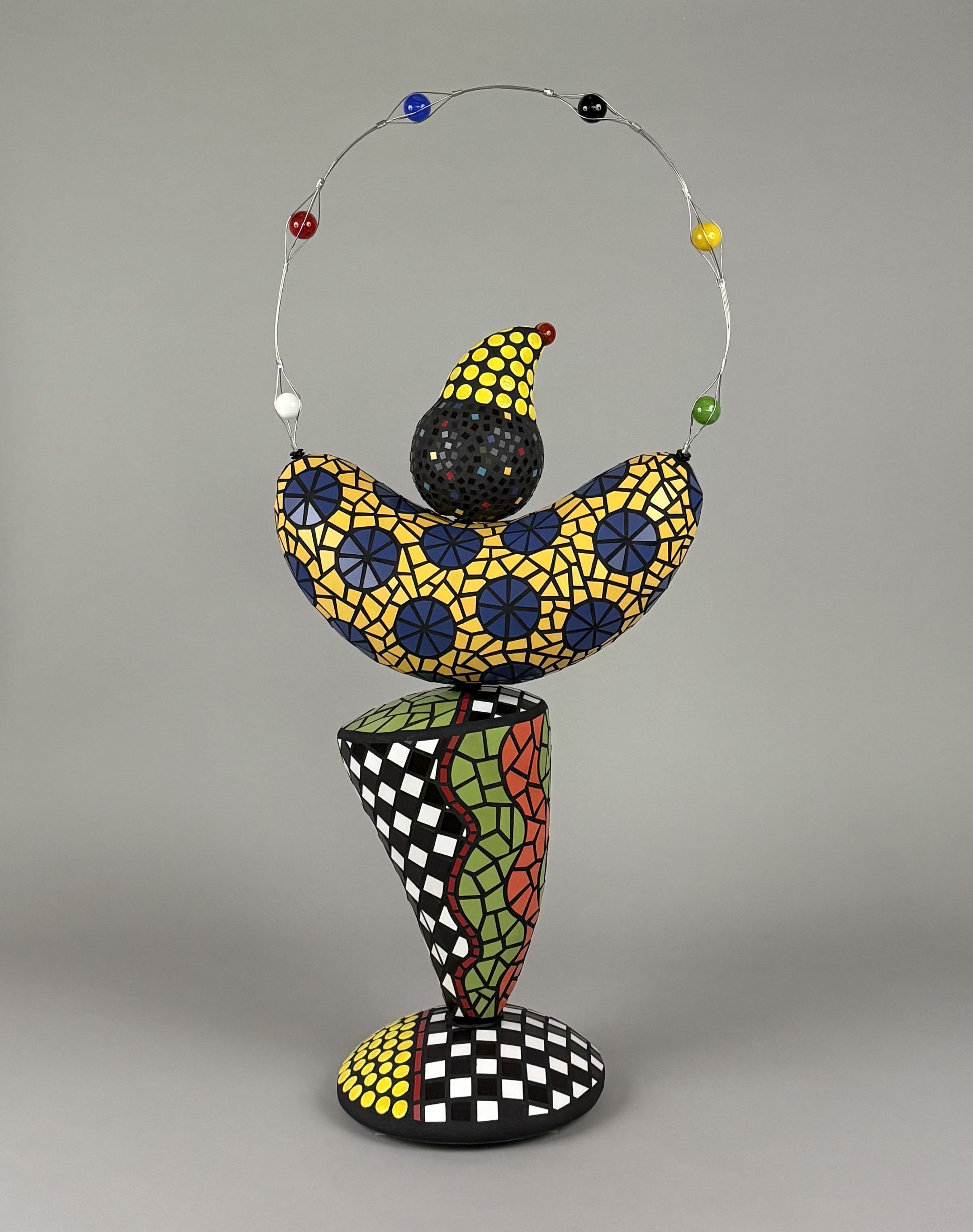
Sherri has done the same throughout her own career: learning new processes, breaking rules, making mistakes, and adapting what she learned to suit the work in front of her.
“I always tell people I can write the books because I’ve made the most mistakes.”
These days, some of that experimentation is turning inward. After decades of commissions, Sherri is trying to reserve more time for her own ideas and become more selective about the projects she accepts.
“‘No’ is probably my hardest word,” she says.
Ideas sometimes remain in her sketchbooks until she has the tools, time, or perspective to approach them differently. Even then, the first solution is not necessarily the best one.
“I may sketch something out, make notes, and then come back to it later and realize, ‘I can do better than that.’”
Because after more than five decades of making things, “almost” still fails to stop her.
For further information about Sherri Warner Hunter, visit her website and social media.